TITAN · 09
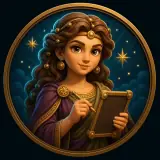
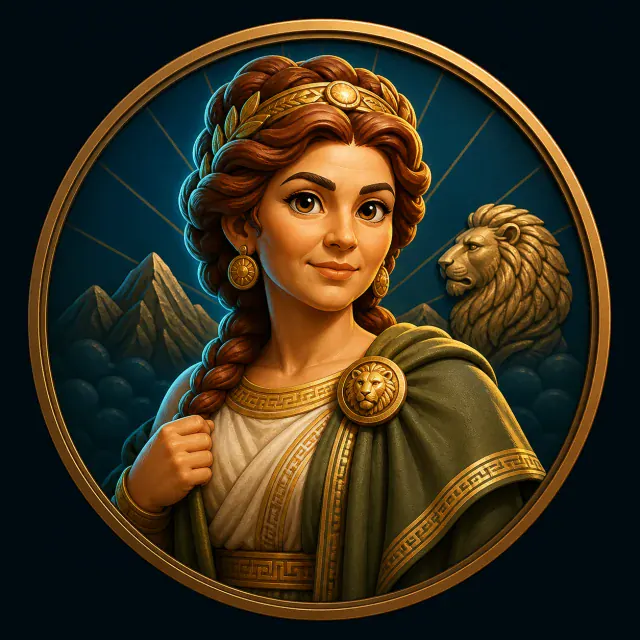
Illustrated portrait of Rhea

Portrait from the MythBranch atlas
Interpretive illustration, not an ancient likeness

Greek mythology research profile · cited sources

Rhea

Ops · Mother of the first Olympian siblings

Rhea is the Titan daughter of Gaia and Uranus, partner of Cronus, and mother of the first Olympian siblings. Her defining myth is not passive motherhood: after Cronus swallows five children, she consults older powers, hides Zeus, and gives Cronus a wrapped stone. Greek Rhea later overlaps with the Anatolian Mother of the Gods and Roman Magna Mater, bringing lions, mountains, drums, and ecstatic ritual into her reception.

Names · attributes · ancient evidence

Rhea: identity and historical contexts.

Hesiod frames Rhea through repeated childbirth and grief, but she is also the agent who interrupts Cronus's control. Her trip to Crete, consultation with Gaia and Uranus, concealment of Zeus, and substitution of stone for baby build an intelligent chain of action. Later hymn, cult, and art can identify Rhea with Cybele or the Mother of the Gods, yet those religious histories have distinct Anatolian, Greek, and Roman contexts.

The name Ops is often presented as a Roman equivalent, while Roman religious practice more strongly associates the mother of the gods with Magna Mater/Cybele. Exact equations vary by genre and period. Likewise, Cretan stories supply different nurses, caves, armed dancers, and noise-making guardians for Zeus. These variants share the need to conceal the child but should not be collapsed into a single documentary account.

01Rhea · Flowing one02Mētēr Theōn · Mother of gods03Megale Mētēr · Great Mother04Oreia · Mountain one05Leontopotmos · Lion-associated
01

The deception is a maternal counter-ritual

Cronus controls birth by swallowing. Rhea stages another birth-sign: swaddling is transferred to a stone, and the external appearance of a newborn defeats the ruler's appetite. The object is not a random trick but a substitute that exposes how little Cronus attends to the children as persons.


02

Rhea, Cybele, and careful equivalence

By the classical and Hellenistic periods, poets and worshippers could identify Rhea with the Mother of the Gods, while Roman reception developed Magna Mater's own institutions. Lions, tympanum, towers, and mountain settings often belong to that shared visual field. A catalogue must name the specific object label rather than declaring every Cybele image a direct portrait of Hesiod's Rhea.

Texts · chronology · variant traditions

Selected ancient narratives involving Rhea.

Her myths connect dynastic motherhood with Cretan sacred geography and the mobile cult image of the Great Mother.

01

Titan kingship

Five children disappear

Rhea bears Hestia, Demeter, Hera, Hades, and Poseidon, but Cronus swallows each because he fears overthrow. The Theogony does not reduce Rhea's response to private sorrow: as the sixth pregnancy approaches, she actively seeks the counsel of Gaia and Uranus and participates in a plan to preserve succession.

Hesiodic tradition: Theogony ↗
02

Birth of Zeus

Zeus is hidden in Crete

Rhea travels to Crete and gives birth in a cave or sacred Cretan landscape, depending on the source. Gaia receives the child while Rhea presents Cronus with a stone wrapped in swaddling bands. Later Cretan traditions add Curetes or Korybantes whose clashing weapons and drums conceal the infant's cries.

Hesiodic tradition: Theogony ↗Pseudo-Apollodorus: Library of Greek Mythology ↗
03

Cult and later poetry

Rhea becomes Mother of the Gods

Greek poets and cult practice increasingly associate Rhea with the mountain-dwelling Mother, accompanied by lions, drums, and ecstatic attendants. Euripides' Bacchae places related mother-goddess imagery near Dionysiac music. Roman Magna Mater later enters state religion with her own Phrygian story and priesthood.

Anonymous: Homeric Hymn to the Mother of the Gods ↗Pausanias: Description of Greece ↗

Genealogical records and atlas relationships

Genealogical evidence and variant traditions.

Rhea and Cronus produce the generation that becomes the core Olympian sibling group. The atlas makes that branch central because her deception allows every swallowed child to return.

Genealogy note

Hestia, Demeter, Hera, Hades, Poseidon, and Zeus are the canonical six children in Hesiod. The chart does not encode every Cretan nurse or cult companion because those are not the same kind of genealogical relation.

Open the interactive branch ↗

Text · stage · screen · scholarship

Selected works concerning Rhea in later reception.

Each selected work treats this figure as its subject, title presence, principal voice, or central dramatic agent. Incidental appearances are excluded. The bibliography also avoids assigning the same representative title to multiple profiles except where a shared primary text is indispensable.

  1. late 8th–7th c. BCETheogony: Rhea Saves ZeusCosmogonic poem
  2. AntiquityHomeric Hymn 14: To the Mother of the GodsHymn
  3. 2nd c. CEDescription of Greece: Images of RheaTravel and sanctuary record
01

Selected bibliography

Ancient poetry

01 works
02

Selected bibliography

Cult & hymn

02 works

When modern book covers or publicity images are shown, they appear at small scale for identification and criticism; copyright remains with the named rights holders. Public-domain context images are explicitly labeled.

Sources and documentation

Primary texts, scholarship, and catalogue records.

Dates follow conventional scholarly ranges. Cover thumbnails identify modern editions; they do not represent the original material form of an ancient text. Links lead to university archives, publishers, and museum catalogues.

Ancient source

4
  1. 01TheogonyHesiodic tradition
    Verified text or catalogue record
    Theogony↗

    Hesiodic tradition · late 8th–7th c. BCE

    Rhea's children, consultation, journey, deception, and preservation of Zeus.
    Edition or recordGreek text and translation · Perseus Digital Library
  2. 02Library of Greek MythologyPseudo-Apollodorus
    Verified text or catalogue record
    Library of Greek Mythology↗

    Pseudo-Apollodorus · 1st–2nd c. CE

    Later synthesis of Cretan concealment, guardians, and the swallowed siblings.
    Edition or recordGreek text and translation · Perseus Digital Library
  3. 03Homeric Hymn to the Mother of the GodsAnonymous
    Verified text or catalogue record
    Homeric Hymn to the Mother of the Gods↗

    Anonymous · Antiquity

    Ritual-poetic evidence for the lion, drum, and mountain-associated Mother.
    Edition or recordClassical text translation · Theoi library
  4. 04Description of GreecePausanias
    Verified text or catalogue record
    Description of Greece↗

    Pausanias · 2nd c. CE

    Local images, sanctuaries, and material traditions connected with Rhea.
    Edition or recordGreek text and translation · Perseus Digital Library

Family questions

Questions about Rhea's family.

Who are Rhea's parents?

Rhea is a Titan daughter of Gaia and Uranus.

Who are Rhea's children?

With Cronus she bears Hestia, Demeter, Hera, Hades, Poseidon, and Zeus.

How did Rhea save Zeus?

She hid the newborn in Crete and gave Cronus a swaddled stone to swallow, following a plan made with Gaia and Uranus.