TITAN · 11
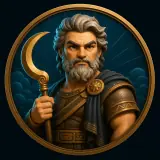
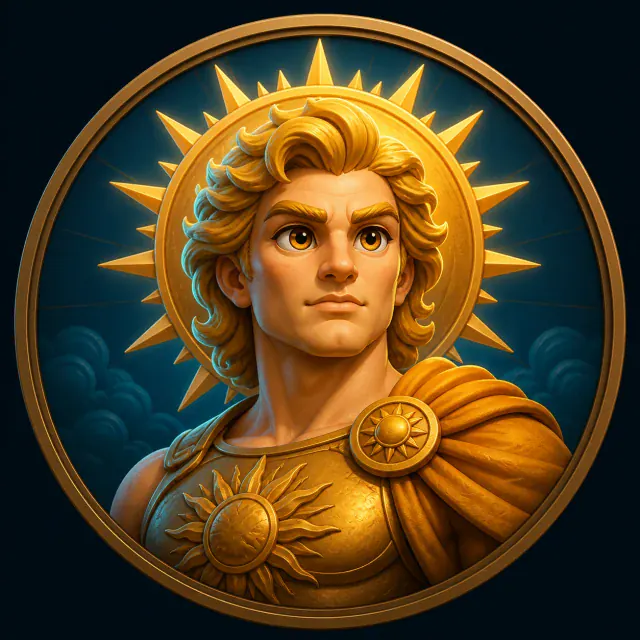
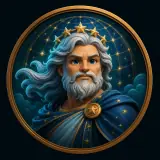
Illustrated portrait of Hyperion

Portrait from the MythBranch atlas
Interpretive illustration, not an ancient likeness

Greek mythology research profile · cited sources

Hyperion

Hyperion · Titan father of sun, moon, and dawn

Hyperion is a Titan son of Gaia and Uranus, partner of Theia, and father of Helios, Selene, and Eos—the sun, moon, and dawn. Ancient narrative gives him little independent action, yet his genealogy concentrates celestial sight and cyclical light. Romantic reception radically expands that narrow profile: John Keats makes Hyperion the still-radiant Titan of a fallen order and the center of two unfinished experiments in epic succession.

Names · attributes · ancient evidence

Hyperion: identity and historical contexts.

Hyperion's name suggests ‘the one who goes above’ or ‘he who watches from above,’ though ancient etymology and modern philology should not be confused. Homer sometimes uses Hyperion or Hyperionides around Helios, which encourages overlap between father and solar son. Hesiod keeps them distinct by giving Hyperion and Theia three luminous children. The Titan's identity is therefore clearest through relation rather than a separate cult biography.

Many modern summaries call Hyperion ‘god of heavenly light,’ a reasonable interpretive shorthand but not a complete ancient office. There is limited evidence for independent cult and no stable ancient portrait type. Keats gives the Titan substantially more individual characterization than Hesiod; Dan Simmons's science-fiction title and the Saturnian moon are instances of reception by naming rather than retellings of the ancient figure.

01Hyperiōn · The one above02Euryphaēs · Far-shining, later association03Titan04Patēr Hēlioio · Father of Helios05Watchful height
01

Celestial light is distributed among children

Helios drives the sun, Selene is the moon, and Eos is dawn. Hyperion's importance lies in fathering a complete visible cycle with Theia, whose name and later interpretations evoke sight or shining value. Calling the father simply ‘the sun’ erases the differentiation that the genealogy creates.
02

Hyperion's interior life in Keats

Ancient sources do not narrate Hyperion's emotional response to Titan defeat. Keats uses that absence in his Romantic epic, presenting the Titan as one of the old gods who retains splendor while anticipating replacement. This interior characterization has no equivalent in the surviving ancient record.

Texts · chronology · variant traditions

Selected ancient narratives involving Hyperion.

Hyperion's page must distinguish the brevity of ancient evidence from the extraordinary literary weight of his modern afterlife.

01

Hesiod · Theogony

Hyperion and Theia produce the lights

Among the Titan unions, Hyperion joins Theia and fathers Helios, Selene, and Eos. The genealogy gives sun, moon, and dawn a single household while keeping each phenomenon independently personified. Hyperion himself receives no extended action in the surviving passage.

Hesiodic tradition: Theogony ↗
02

Olympian succession

The Titan generation falls

Hesiod's Titanomachy treats the defeated Titans collectively and does not single Hyperion out for a dramatic duel. Later mythography names him in the generation overthrown by Zeus. The lack of a personal defeat scene gave later artists room to imagine how a lord of brightness might experience eclipse by a new order.

Hesiodic tradition: Theogony ↗Pseudo-Apollodorus: Library of Greek Mythology ↗
03

Romantic reception

Keats imagines the last radiant Titan

In Keats's Hyperion, Saturn mourns, Oceanus theorizes succession, and Hyperion still blazes in his palace while sensing the coming Apollo. The abandoned poem and the later Fall of Hyperion examine the ethical and aesthetic claims used to justify the replacement of one order by another.

John Keats: Hyperion ↗

Genealogical records and atlas relationships

Genealogical evidence and variant traditions.

The atlas shows Hyperion among the Titans but does not include Theia, Helios, Selene, or Eos as nodes. Their absence is a visualization limit, not a rejection of the central ancient genealogy.

Unions drawn in this atlas

00

No line of this type is drawn in the current atlas.

Children drawn in this atlas

00

No line of this type is drawn in the current atlas.

Genealogy note

Hesiod consistently presents Hyperion and Theia as parents of Helios, Selene, and Eos. Some poetic usage lets the name Hyperion overlap with Helios, so readers should attend to context.

Open the interactive branch ↗

Text · stage · screen · scholarship

Selected works concerning Hyperion in later reception.

Each selected work treats this figure as its subject, title presence, principal voice, or central dramatic agent. Incidental appearances are excluded. The bibliography also avoids assigning the same representative title to multiple profiles except where a shared primary text is indispensable.

  1. 1818–19HyperionUnfinished poem
  2. 1819The Fall of Hyperion: A DreamRecast dream poem
  3. late 8th–7th c. BCETheogony: The Children of HyperionCosmogonic poem
01

Selected bibliography

Romantic epic

02 works
02

Selected bibliography

Ancient genealogy

01 works

When modern book covers or publicity images are shown, they appear at small scale for identification and criticism; copyright remains with the named rights holders. Public-domain context images are explicitly labeled.

Sources and documentation

Primary texts, scholarship, and catalogue records.

Dates follow conventional scholarly ranges. Cover thumbnails identify modern editions; they do not represent the original material form of an ancient text. Links lead to university archives, publishers, and museum catalogues.

Ancient source

2
  1. 01TheogonyHesiodic tradition
    Verified text or catalogue record
    Theogony↗

    Hesiodic tradition · late 8th–7th c. BCE

    Parentage, Titan generation, and children with Theia.
    Edition or recordGreek text and translation · Perseus Digital Library
  2. 02Library of Greek MythologyPseudo-Apollodorus
    Verified text or catalogue record
    Library of Greek Mythology↗

    Pseudo-Apollodorus · 1st–2nd c. CE

    Later mythographic placement of Hyperion in Titan genealogy.
    Edition or recordGreek text and translation · Perseus Digital Library

Academic study

2
  1. 01HyperionJohn Keats
    Verified text or catalogue record
    Hyperion↗

    John Keats · 1818–19

    Authoritative text record for the principal modern literary reception of Hyperion.
    Edition or recordPoetry Foundation text
  2. 02Keats's Hyperion and Classical SuccessionLiterary scholarship trail
    Verified text or catalogue record
    Keats's Hyperion and Classical Succession↗

    Literary scholarship trail · Modern research

    Research pathway for form, politics, sources, and the two unfinished versions.
    Edition or recordJSTOR indexed scholarship

Family questions

Questions about Hyperion's family.

Who are Hyperion's parents?

Hyperion is a Titan son of Gaia and Uranus.

Who are Hyperion's children?

With Theia he fathers Helios, Selene, and Eos: sun, moon, and dawn.

Is Hyperion the sun god?

Helios is the personified sun. Hyperion is his Titan father, though poetic language sometimes allows the names to overlap.