TITAN · 12
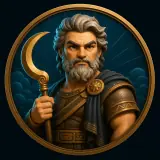
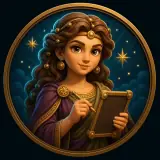
Illustrated portrait of Coeus

Portrait from the MythBranch atlas
Interpretive illustration, not an ancient likeness

Greek mythology research profile · cited sources

Coeus

Polus · A sparsely attested Titan of a major line

Coeus is one of the twelve Titans, son of Gaia and Uranus, partner of Phoebe, and father of Leto and Asteria. Through Leto he becomes grandfather of Apollo and Artemis; through Asteria his line reaches Hecate. Ancient texts preserve almost no independent action or cult biography. Later interpretations connect his name with inquiry and the celestial axis, but those attractive meanings require caution because they are not an ancient narrative dossier.

Names · attributes · ancient evidence

Coeus: identity and historical contexts.

Koios appears in genealogical catalogues and the collective history of the Titans. His name may be related to a word for questioning or perception, while the Romanizing label Polus reflects later association with the celestial pole. Neither etymology gives us permission to invent a god ‘of intelligence’ with a detailed office. His secure importance lies in parentage: Phoebe, Leto, Asteria, Apollo, Artemis, and Hecate form a line of prophecy, night, boundary, and luminous divine power.

The absence of long stories is itself evidence about preservation and ancient emphasis. Modern mythology handbooks often fill the gap with neat domains, cardinal directions, and symbolic systems assembled from late or speculative material. This page distinguishes secure genealogy from interpretive reconstruction. No independent ancient portrait is reproduced because museum catalogues do not offer a stable Coeus iconographic type.

01Koios · Coeus02Titan03Polos · Later celestial association04Patēr Lētous · Father of Leto05Genealogical elder
01

Do not confuse a meaningful name with a documented office

Greek divine names invite etymology, and later mythographers loved systematic assignments. But a possible link between Koios and inquiry does not prove temples, rituals, or myths in which he governs intellect. The page uses ‘associated in later interpretation’ and keeps the archive's silence visible.


02

Descendants create the profile's real density

Apollo and Artemis are among the best-attested Olympians, and Hecate has a major hymn in Hesiod. Coeus stands two generations behind them. His branch shows why a family tree can recover significance without pretending every ancestor received equal narrative attention.

Texts · chronology · variant traditions

Selected ancient narratives involving Coeus.

Coeus's page centers the few securely preserved relationships and explains why later systems should not be mistaken for early Greek consensus.

01

Titan generation

Gaia and Uranus produce Coeus

Hesiod names Coeus among the Titan sons and daughters of Earth and Sky. He appears in a sequence rather than an individualized birth scene. Like his siblings, he belongs to the generation between primordial geography and Olympian rule.

Hesiodic tradition: Theogony ↗
02

Titan unions

Coeus and Phoebe form a prophetic line

Coeus joins Phoebe and fathers Leto and Asteria. Leto bears Apollo and Artemis by Zeus; Asteria becomes mother of Hecate in dominant genealogies. Phoebe's later association with Delphi and Apollo's oracle encouraged interpreters to see the branch as one of inherited prophetic intelligence.

Hesiodic tradition: Theogony ↗Pseudo-Apollodorus: Library of Greek Mythology ↗
03

Titanomachy

The Titans are defeated collectively

Early surviving poetry does not give Coeus a named duel. He belongs to the Titan generation displaced by Zeus, while later accounts can place the defeated Titans in Tartarus. Modern retellings sometimes individualize him, but that characterization belongs to reception rather than ancient testimony.

Hesiodic tradition: Theogony ↗Pseudo-Apollodorus: Library of Greek Mythology ↗

Genealogical records and atlas relationships

Genealogical evidence and variant traditions.

The atlas shows Coeus among the Titan siblings but not his partner Phoebe or descendants. His page restores the Leto–Apollo–Artemis and Asteria–Hecate lines in prose.

Unions drawn in this atlas

00

No line of this type is drawn in the current atlas.

Children drawn in this atlas

00

No line of this type is drawn in the current atlas.

Genealogy note

Coeus and Phoebe are parents of Leto and Asteria in Hesiod. The chart does not draw every Titan marriage, so the absence of a union line is not a contrary genealogical claim.

Open the interactive branch ↗

Text · stage · screen · scholarship

Selected works concerning Coeus in later reception.

Each selected work treats this figure as its subject, title presence, principal voice, or central dramatic agent. Incidental appearances are excluded. The bibliography also avoids assigning the same representative title to multiple profiles except where a shared primary text is indispensable.

  1. late 8th–7th c. BCETheogony: The Line of Coeus and PhoebeCosmogonic poem
  2. 1st–2nd c. CELibrary: Titan GenealogiesMythographic handbook
  3. Modern scholarshipCoeus in Classical Reference TraditionReference research
01

Selected bibliography

Ancient genealogy

02 works
02

Selected bibliography

Reference & scholarship

01 works

When modern book covers or publicity images are shown, they appear at small scale for identification and criticism; copyright remains with the named rights holders. Public-domain context images are explicitly labeled.

Sources and documentation

Primary texts, scholarship, and catalogue records.

Dates follow conventional scholarly ranges. Cover thumbnails identify modern editions; they do not represent the original material form of an ancient text. Links lead to university archives, publishers, and museum catalogues.

Ancient source

2
  1. 01TheogonyHesiodic tradition
    Verified text or catalogue record
    Theogony↗

    Hesiodic tradition · late 8th–7th c. BCE

    Coeus's Titan parentage, union with Phoebe, and daughters Leto and Asteria.
    Edition or recordGreek text and translation · Perseus Digital Library
  2. 02Library of Greek MythologyPseudo-Apollodorus
    Verified text or catalogue record
    Library of Greek Mythology↗

    Pseudo-Apollodorus · 1st–2nd c. CE

    Later reference genealogy and Titan succession context.
    Edition or recordGreek text and translation · Perseus Digital Library

Academic study

2
  1. 01Koios / Coeus textual occurrencesPerseus Digital Library
    Verified text or catalogue record
    Koios / Coeus textual occurrences↗

    Perseus Digital Library · Corpus research

    Search trail for testing how rarely the Titan appears outside genealogy.
    Edition or recordTufts University digital corpus
  2. 02The Titans in Early Greek PoetryClassical scholarship trail
    Verified text or catalogue record
    The Titans in Early Greek Poetry↗

    Classical scholarship trail · Modern research

    Research pathway for Titan classification, etymology, and later systematization.
    Edition or recordJSTOR indexed scholarship

Family questions

Questions about Coeus's family.

Who are Coeus's parents?

Coeus is a Titan son of Gaia and Uranus.

Who are Coeus's children?

With Phoebe he fathers Leto and Asteria, making him grandfather of Apollo, Artemis, and Hecate in major genealogies.

What is Coeus the god of?

Ancient sources securely attest his Titan genealogy but do not give him a clear independent divine office. Associations with inquiry or the celestial axis are later interpretations that should be labeled cautiously.