OLYMPIAN · 04
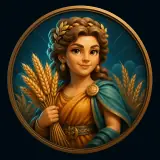
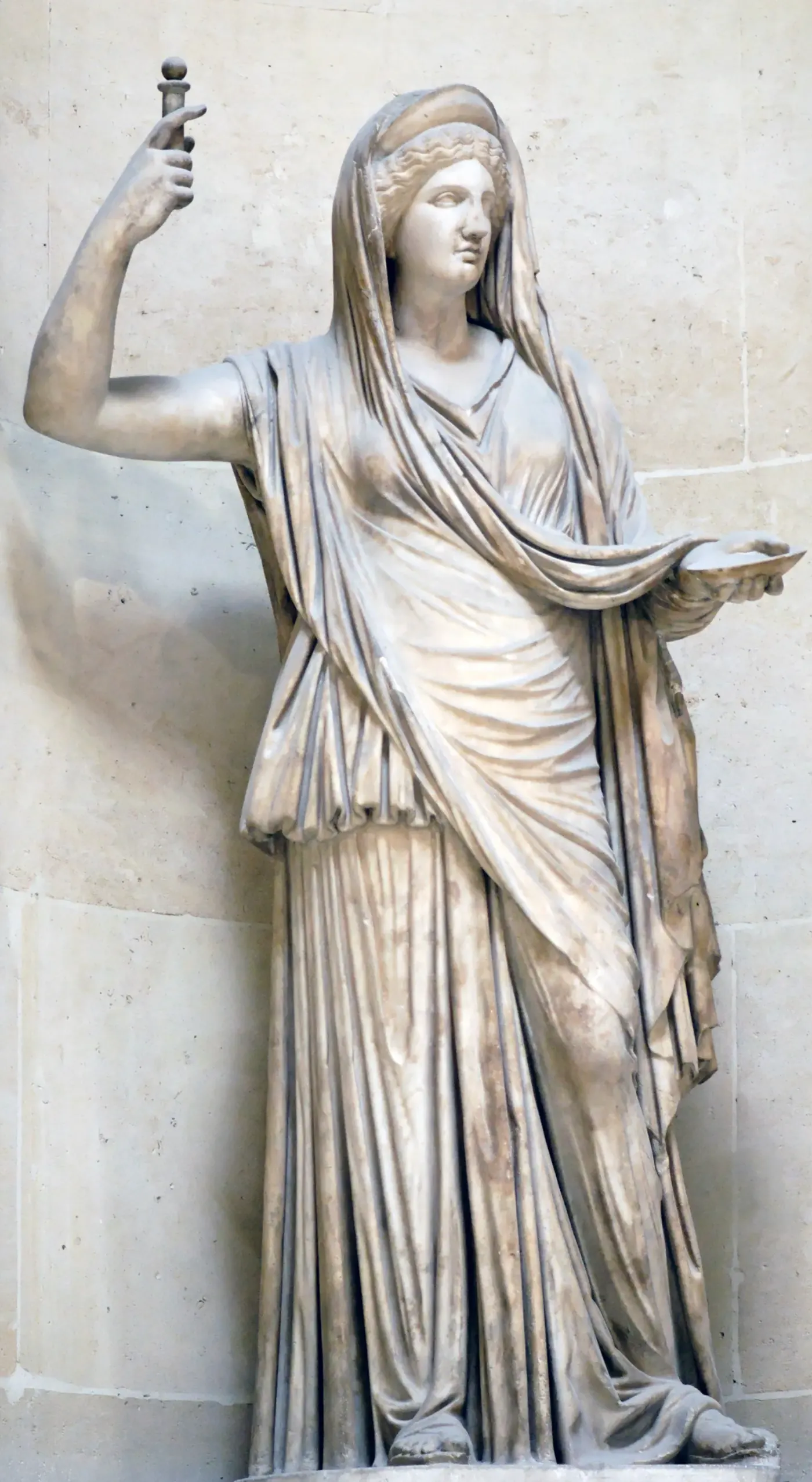
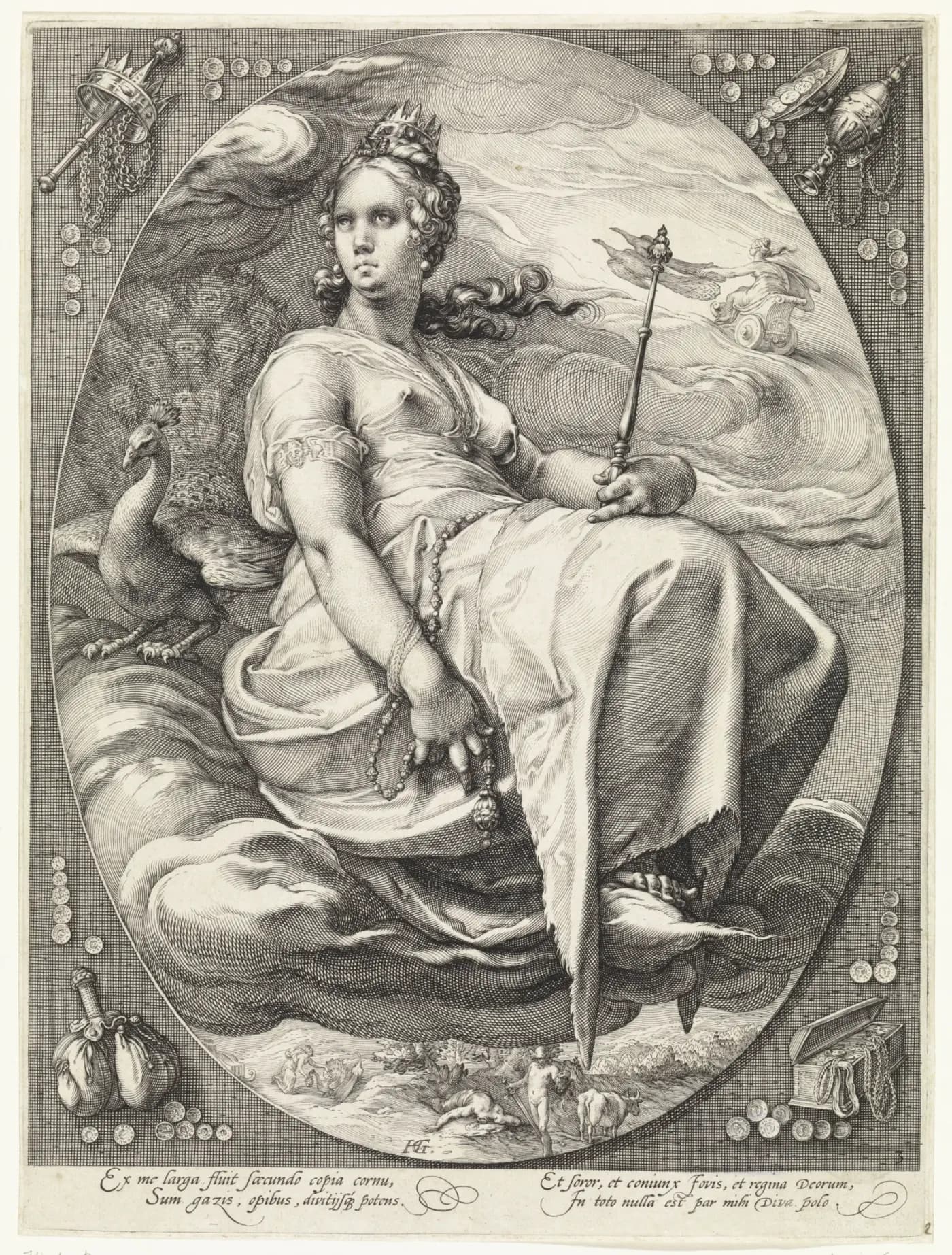
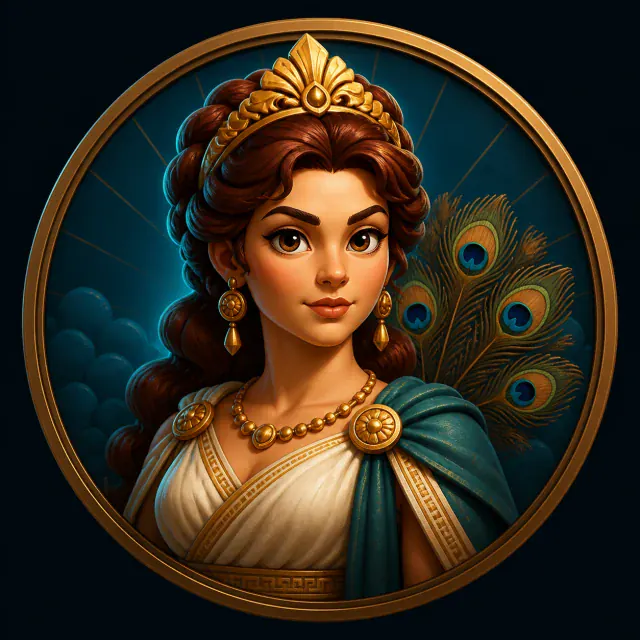
Illustrated portrait of Hera with a diadem and sceptre

Portrait from the MythBranch atlas
Interpretive illustration, not an ancient likeness

Greek deity research profile · cited sources

Hera

Juno · Queenship, marriage & civic order

Hera is the Olympian queen whose authority joins divine marriage, legitimate succession, civic order, and the public dignity of women. Epic often stages her anger inside a troubled marriage to Zeus, but cult, local tradition, and other poems reveal a broader power: sovereign at Argos and Samos, protector of Jason, and an independent strategist among the gods.

Cult, epithets, and civic office

Queenship, marriage, and civic authority.

The modern label ‘goddess of marriage’ describes only part of Hera's ancient functions. At Argos and Samos she received monumental sanctuaries and long civic histories; as Basileia she is queen, as Teleia she brings marriage to fulfillment, and local titles associate her with particular communities. Marriage concerns household legitimacy, inheritance, alliance, and political continuity. Hera's authority consequently belongs to both domestic and civic institutions.

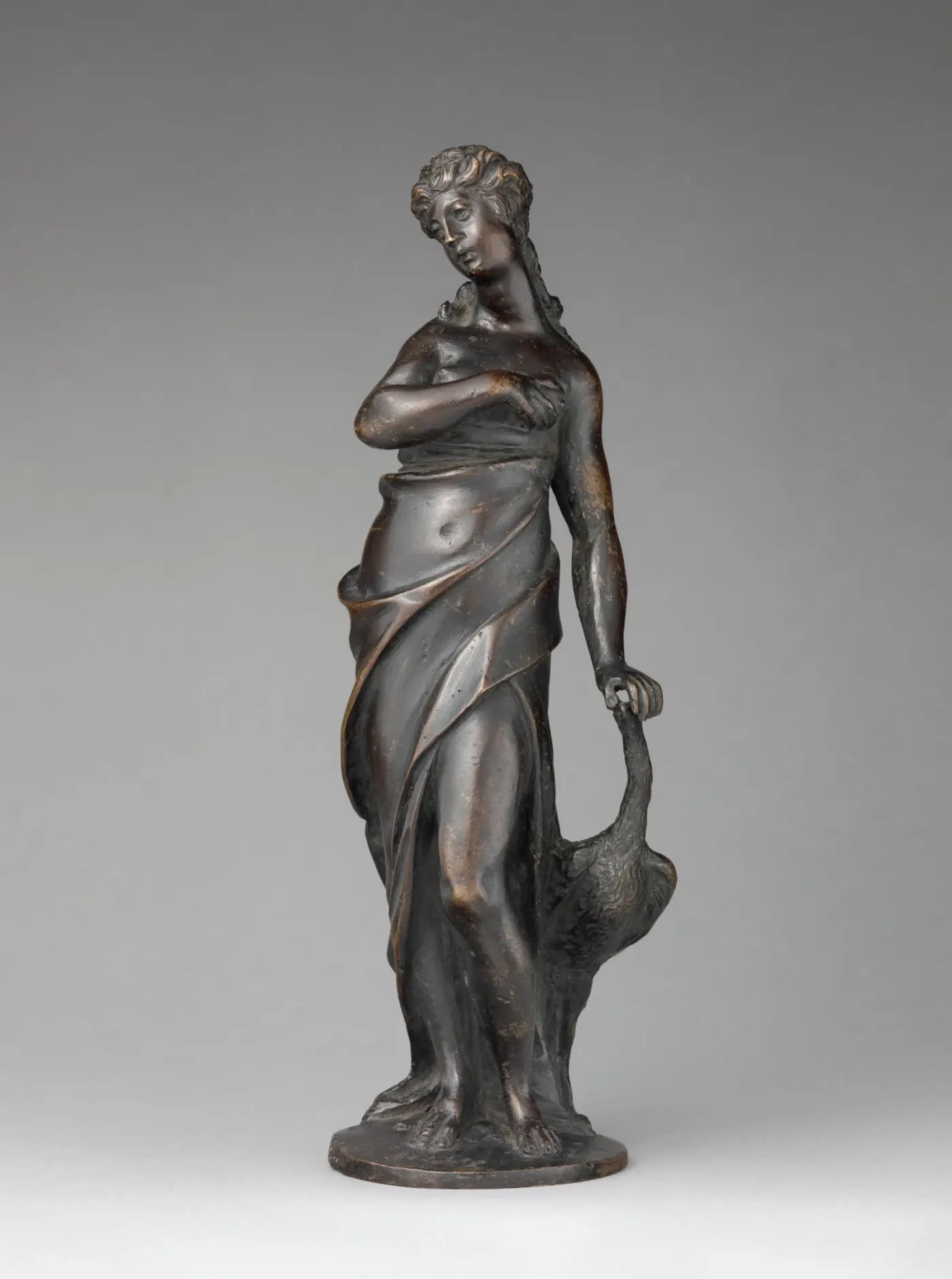
This profile keeps literary characterization, cult practice, and later reception distinct. Homeric epic turns the marriage of Hera and Zeus into a theatre of argument, persuasion, status, and contested policy. Pausanias and archaeological objects attest different local emphases. Roman Juno becomes Hera's closest equivalent but develops her own civic roles, while the peacock—familiar in later European art—should not be projected backward as Hera's only or timeless ancient identifier.

01Basileia02Teleia03Boōpis04Argeia05Samia

From cosmic marriage to heroic patronage

Selected narratives involving Hera.

The selection covers divine succession, political authority, cult, conflict, patronage, and reconciliation.

01

Divine generation and marriage

Daughter of Cronus, queen beside Zeus

Hesiod names Hera among the children swallowed by Cronus and restored when Zeus overturns the older regime. She becomes the honored wife of Zeus and mother of Olympian children. Brief hymnic praise calls her golden-throned queen, placing marital identity beside rank rather than treating marriage as private biography alone.


Hesiod: Theogony ↗Anonymous Greek poet: Homeric Hymn 12: To Hera ↗Vinciane Pirenne-Delforge and Gabriella Pironti: The Hera of Zeus: Intimate Enemy, Ultimate Spouse ↗
02

Trojan War · Iliad Book 14

The deception of Zeus

Determined to aid the Achaeans, Hera borrows Aphrodite's erotic charm, arranges for Sleep to overcome Zeus, and draws her husband away from the battlefield. While Zeus sleeps, Poseidon strengthens the Greeks. Her plan combines dress, speech, memory, desire, alliance, and calculated risk rather than relying on brute force.

Homeric tradition: Iliad ↗Vinciane Pirenne-Delforge and Gabriella Pironti: The Hera of Zeus: Intimate Enemy, Ultimate Spouse ↗
03

Before and during the Trojan War

The Judgment of Paris and the war for Troy

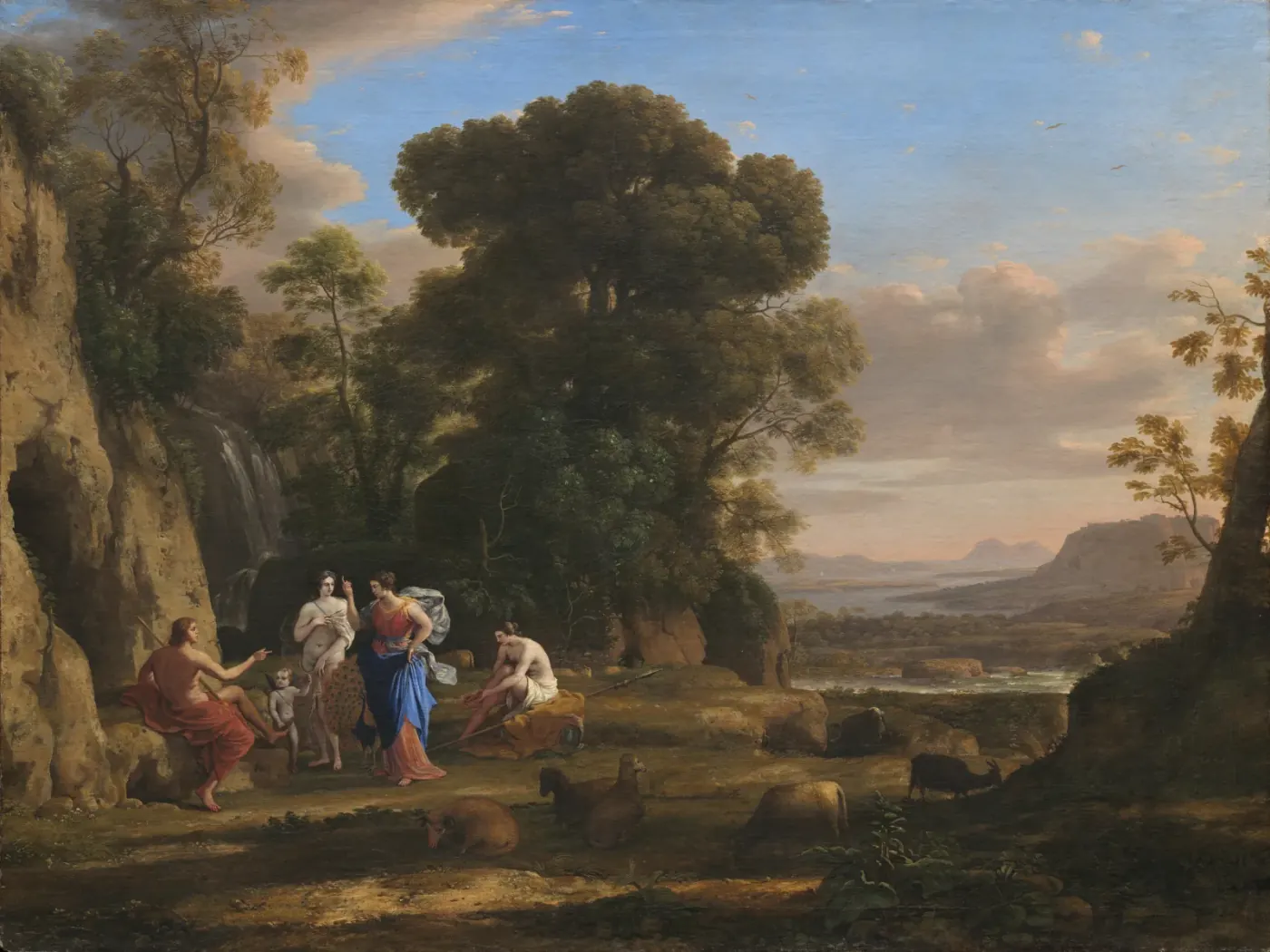
When Paris judges the beauty contest among Hera, Athena, and Aphrodite, later mythography says Hera offers kingship and political power. Paris chooses Aphrodite, and Hera's hostility to Troy becomes one of the Iliad's governing divine commitments. Epic, however, assumes parts of this background rather than narrating one complete canonical contest.

Homeric tradition: Iliad ↗Pseudo-Apollodorus: Library and Epitome ↗
04

Divine conflict and wandering

Io, Argus, and a story transformed by Rome

In the Greek mythographic account, Zeus has Io transformed into a cow, Hera asks for the animal, and the many-eyed Argus guards her until Hermes kills him. Hera then sends a gadfly that drives Io across the world. Later Roman poetry and art elaborate the pursuit, and some familiar details belong to those later retellings rather than the earliest surviving Greek form.

Pseudo-Apollodorus: Library and Epitome ↗
05

Heroic life and apotheosis

Heracles: persecution and reconciliation

Hera delays Heracles' birth, supports Eurystheus' precedence, and repeatedly threatens the son Zeus has fathered with Alcmena. Yet the tradition does not end with permanent hatred: after Heracles' death and admission to Olympus, reconciliation is marked by his marriage to Hera's daughter Hebe. Conflict is ultimately incorporated into the divine household.

Homeric tradition: Iliad ↗Pseudo-Apollodorus: Library and Epitome ↗Vinciane Pirenne-Delforge and Gabriella Pironti: The Hera of Zeus: Intimate Enemy, Ultimate Spouse ↗
06

Quest for the Golden Fleece

Patron of Jason and the Argonauts

Apollonius makes Hera the expedition's principal divine protector. Remembering Jason's earlier respect, she works with Athena, recruits Aphrodite's influence over Medea, and guides decisions that allow the Argonauts to survive. The same goddess who obstructs some heroic lines becomes the architect of another hero's success.

Apollonius of Rhodes: Argonautica ↗Vinciane Pirenne-Delforge and Gabriella Pironti: The Hera of Zeus: Intimate Enemy, Ultimate Spouse ↗

The branch around Hera

Queenship is a family structure.

This section reports relationships actually drawn in the current atlas. Ancient traditions add children or preserve competing parentage, and the chart intentionally does not collapse every version into one line.

Genealogy note

Zeus is both Hera's brother and principal husband in major Greek traditions. The atlas line styles distinguish parentage from union so that these relationship types are never conflated.

Open the interactive branch ↗

Stage · screen · bookshelf

Hera rewrites the part assigned to her.

This section documents reception history rather than ranking adaptations by “accuracy.” Priority is given to works in which Hera or Juno has a principal role, and each entry identifies its evidentiary category.

  1. c. 54 CESenecaRoman tragedy
  2. 1651La CalistoVenetian opera
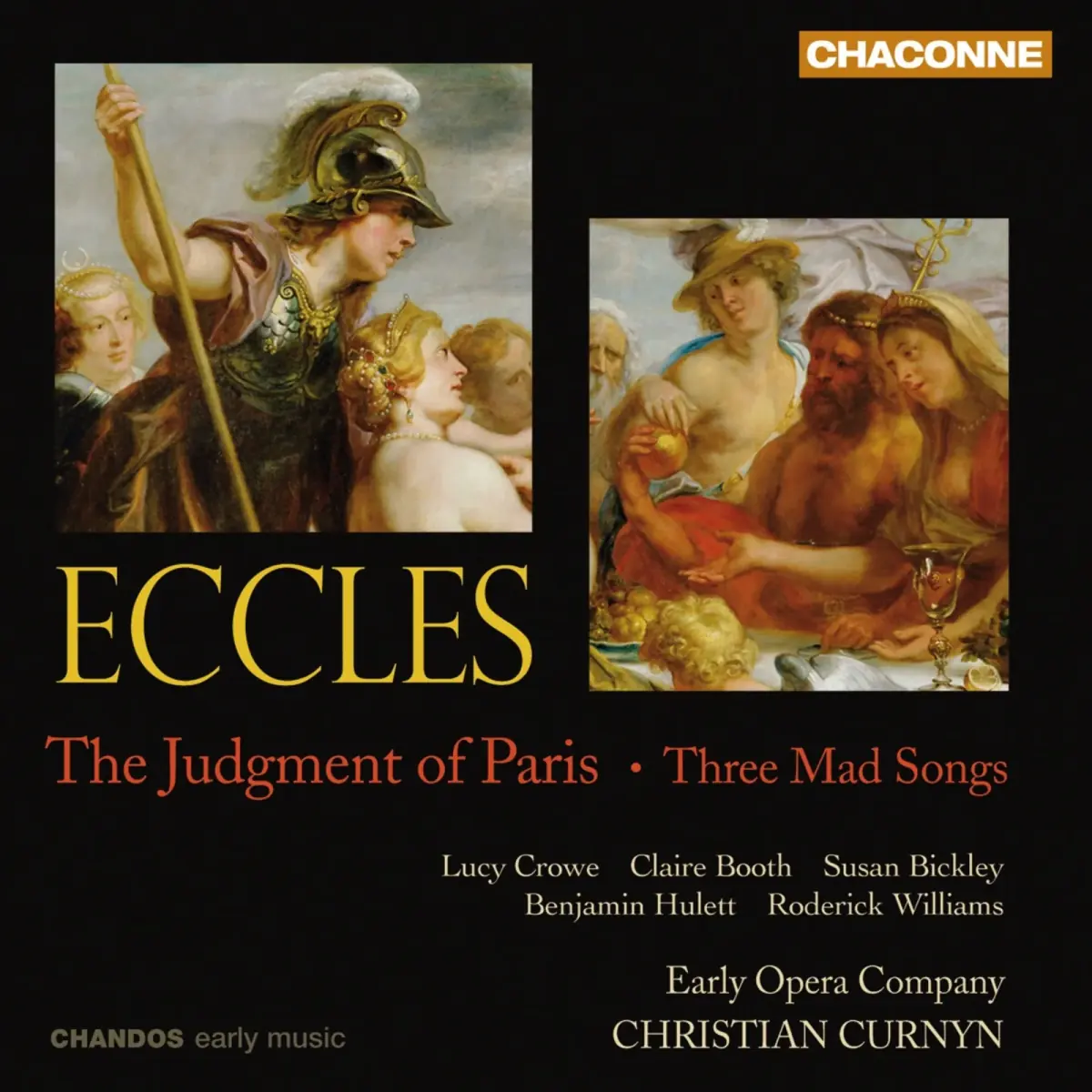
  3. 1701JudgmentEnglish masque
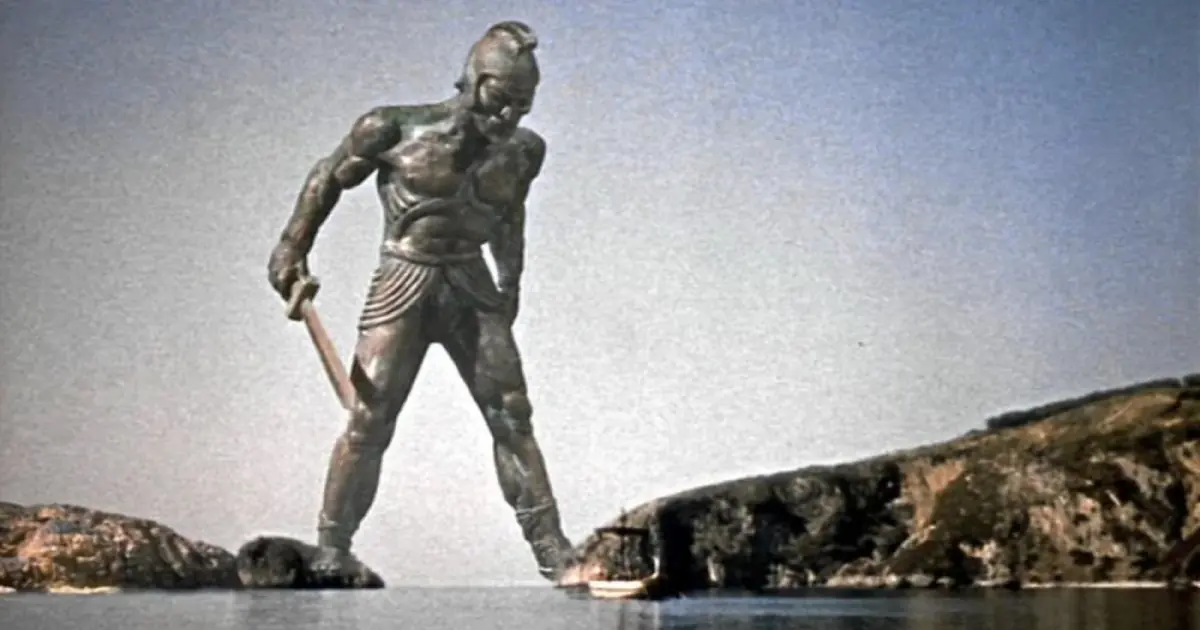
  4. 1963Argonautsfilm patron
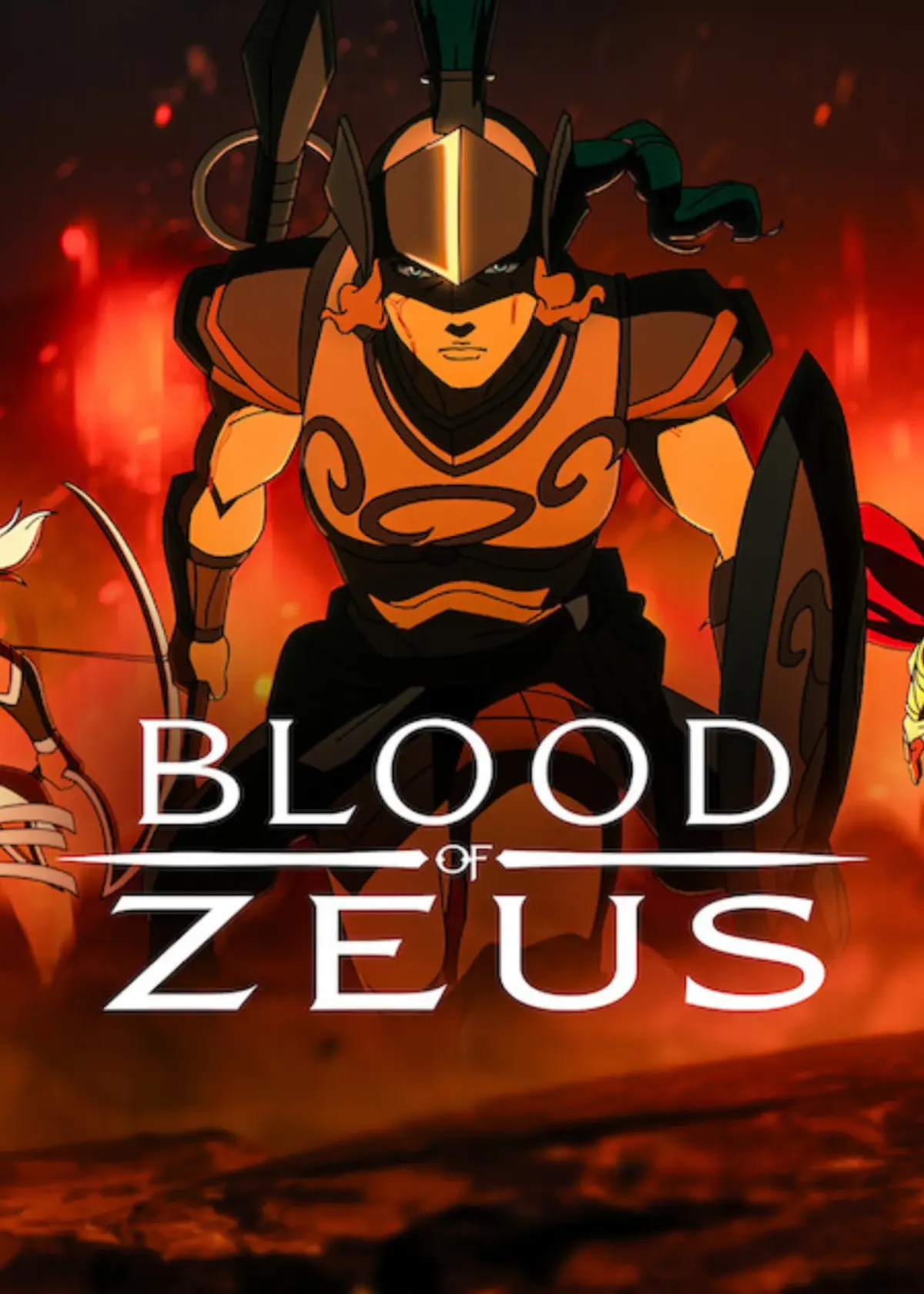
  5. 2020Blood of Zeustelevision
  6. 2024Herafirst-person novel
01

Selected bibliography

Stage & opera

03 works
02

Selected bibliography

Film & television

02 works
03

Selected bibliography

Books & scholarship

04 works

Modern stage, screen, recording, and book thumbnails are official publicity, editorial images, or publisher covers shown at small scale for identification and criticism; copyright remains with the named rights holders.

Sources and documentation

Primary texts, scholarship, and catalogue records.

Dates follow conventional scholarly ranges. Cover thumbnails identify modern editions; they do not represent the original material form of an ancient text. Links lead to Perseus, university publishers, museum catalogues, and specialist institutional records.

Ancient source

6
  1. 01TheogonyHesiod
    Verified text or catalogue record
    Theogony↗

    Hesiod · c. 700 BCE

    The earliest surviving continuous genealogy to name Hera as a daughter of Cronus and Rhea, sister and wife of Zeus, and mother within the Olympian household.
    Edition or recordM. L. West translation · Oxford World's Classics, 1999
  2. 02IliadHomeric tradition
    Verified text or catalogue record
    Iliad↗

    Homeric tradition · late 8th–early 7th century BCE

    The principal early epic witness to Hera as an independent divine strategist: queen of Olympus, patron of the Achaeans, opponent of Troy, and formidable partner in divine politics.
    Edition or recordRobert Fagles translation · Penguin Classics, 1998
  3. 03Homeric Hymn 12: To HeraAnonymous Greek poet
    Verified text or catalogue record
    Homeric Hymn 12: To Hera↗

    Anonymous Greek poet · archaic or classical period

    A brief cult hymn that addresses Hera as golden-throned queen, child of Rhea, and pre-eminent among the immortals beside Zeus.
    Edition or recordMichael Crudden translation · Oxford World's Classics, 2002
  4. 04Library and EpitomePseudo-Apollodorus
    Verified text or catalogue record
    Library and Epitome↗

    Pseudo-Apollodorus · 1st–2nd century CE

    A late Greek mythographic handbook that organizes Hera's genealogy and major conflicts, including Io, Heracles, and the Judgment of Paris, while preserving variants absent from epic.
    Edition or recordRobin Hard translation · Oxford World's Classics, 2008
  5. Cover of a Penguin Classics edition of Pausanias's Guide to GreecePenguin Classics edition
    Description of Greece↗

    Pausanias · 2nd century CE

    An indispensable witness to Hera's sanctuaries, cult images, festivals, and local narratives, especially at the Heraion near Argos and in the Peloponnese.
    Edition or recordPeter Levi translation · Penguin Classics
  6. Cover of a Penguin Classics edition of Apollonius's Voyage of ArgoPenguin Classics edition
    Argonautica↗

    Apollonius of Rhodes · 3rd century BCE

    The major surviving epic in which Hera acts as Jason's divine patron, coordinating with Athena and Aphrodite to protect the voyage and secure the Golden Fleece.
    Edition or recordE. V. Rieu translation · Penguin Classics

Academic study

2
  1. Cover of The Hera of Zeus by Vinciane Pirenne-Delforge and Gabriella PirontiCambridge University Press
    The Hera of Zeus: Intimate Enemy, Ultimate Spouse↗

    Vinciane Pirenne-Delforge and Gabriella Pironti · 2022 English edition

    A major contemporary reassessment of Hera's power across epic, cult, cities, and divine marriage, explicitly moving beyond the reductive stereotype of the jealous wife.
    Edition or recordRaymond Geuss translation · Cambridge University Press, 2022
  2. Cover of Joan V. O'Brien's The Transformation of HeraRowman & Littlefield edition
    The Transformation of Hera↗

    Joan V. O'Brien · 1993

    A scholarly monograph combining literary, ritual, and historical evidence to examine how an important goddess of place and sovereignty was reshaped within Panhellenic epic.
    Edition or recordJoan V. O'Brien · Rowman & Littlefield, 1993

Museum research

1
  1. 01Greek Art from Prehistoric to ClassicalThe Metropolitan Museum of Art
    Verified text or catalogue record
    Greek Art from Prehistoric to Classical↗

    The Metropolitan Museum of Art · Museum scholarly resource

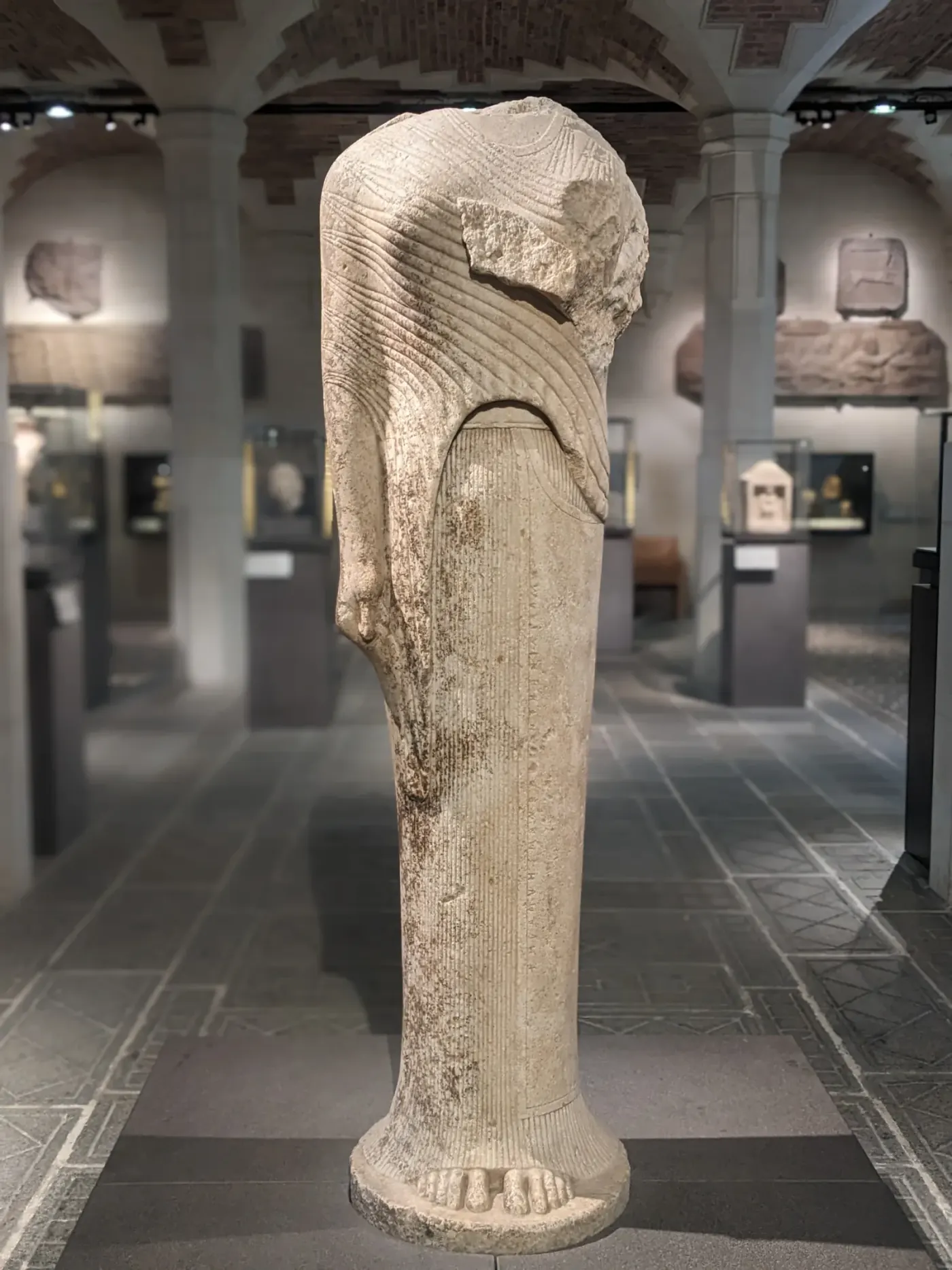
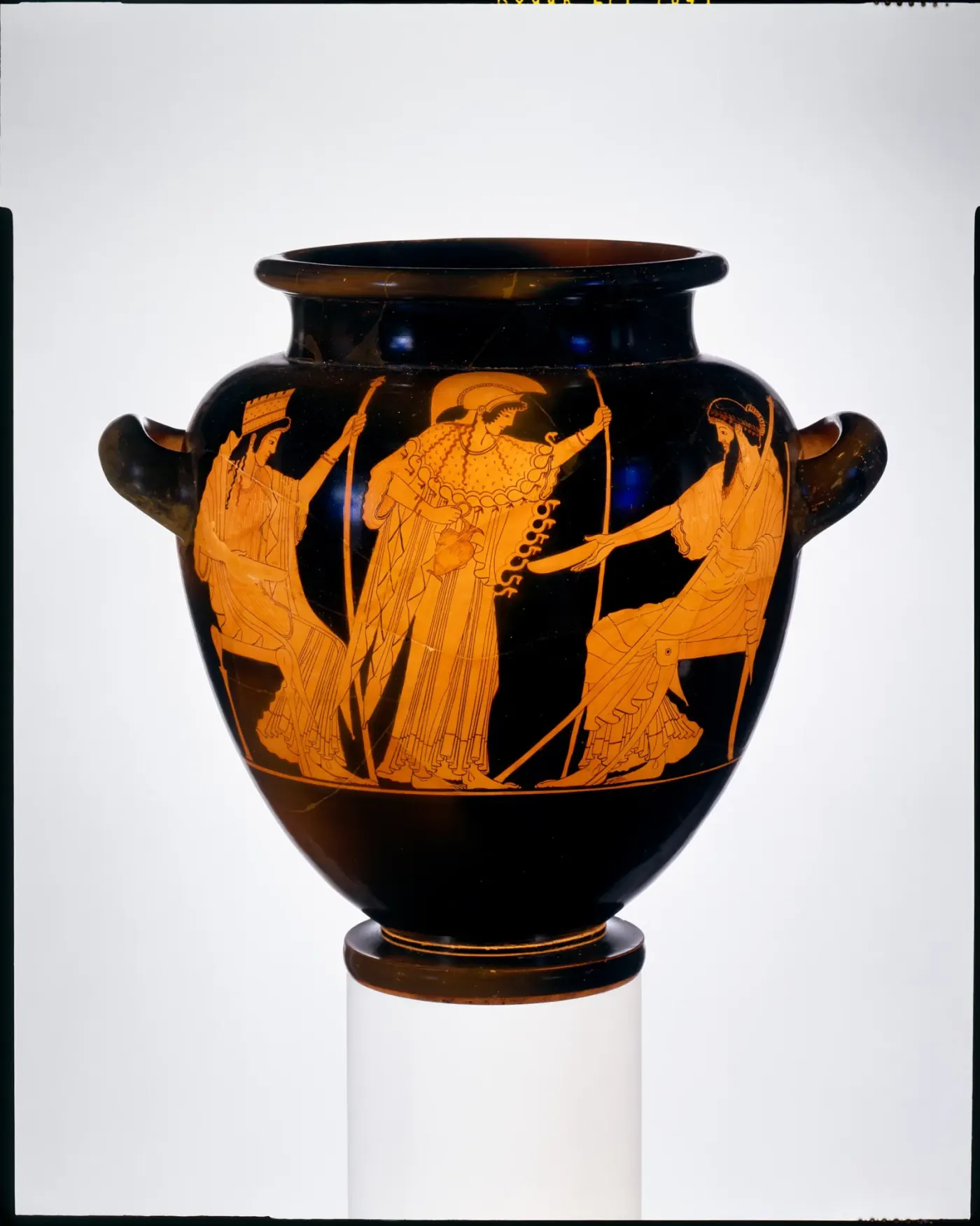
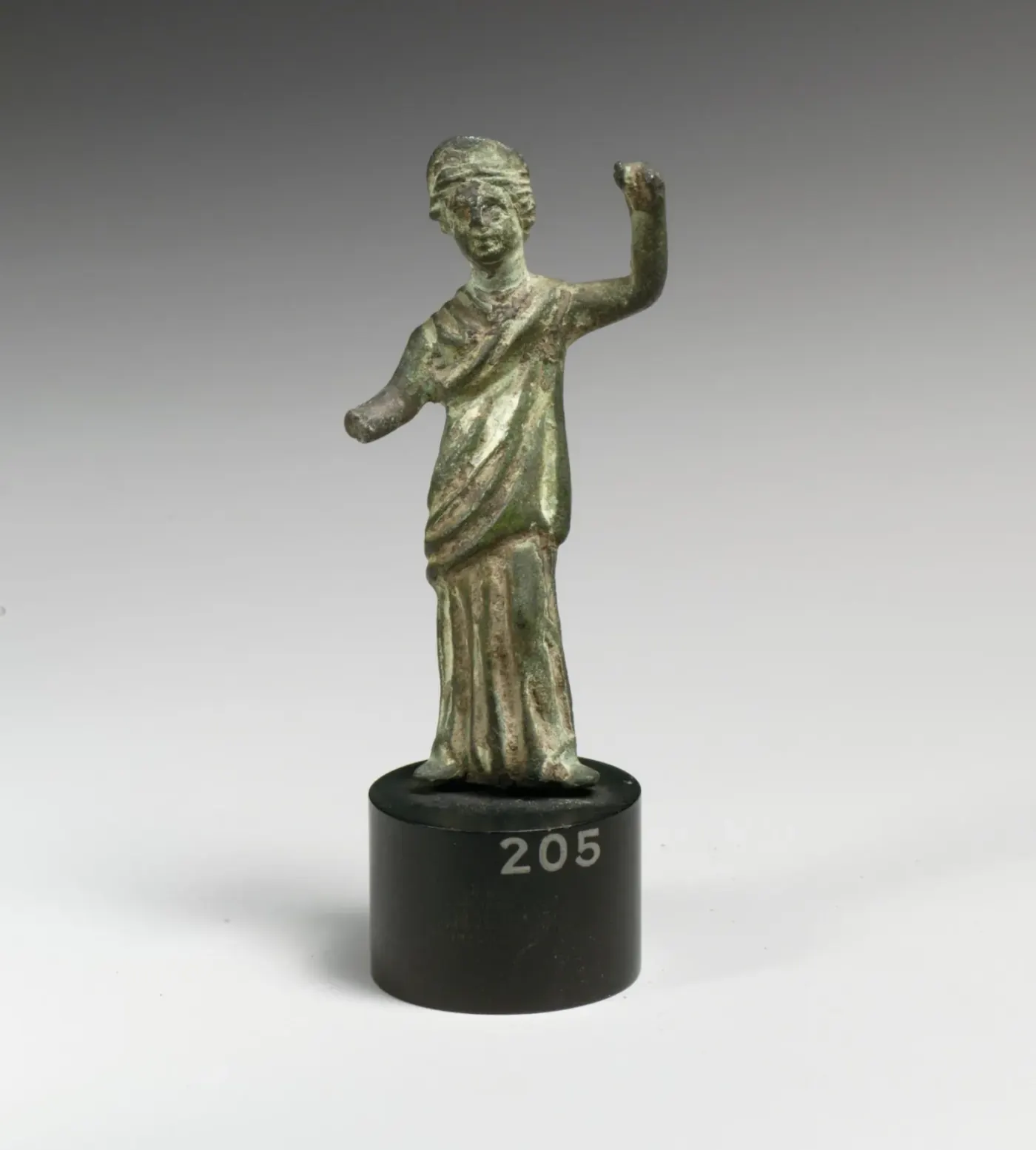
    A museum-authored introduction for situating Hera's vases and statuettes within Greek materials, ritual practices, chronology, and visual conventions.
    Edition or recordMichael Norris · The Metropolitan Museum of Art, 2000