TITAN · 10
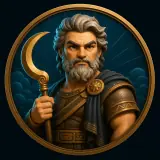
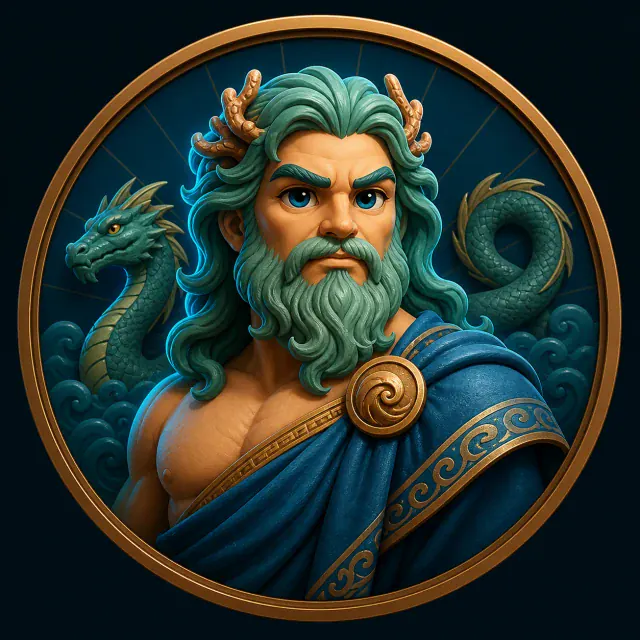
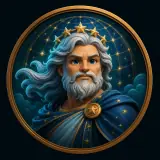
Illustrated portrait of Oceanus

Portrait from the MythBranch atlas
Interpretive illustration, not an ancient likeness

Greek mythology research profile · cited sources

Oceanus

Oceanus · The world-stream at earth's outer edge

Oceanus is the Titan of the freshwater world-stream imagined as circling the inhabited earth. This cosmological river differs from the Atlantic Ocean and from the divine figures Poseidon and Pontus. With Tethys, Oceanus fathers river gods and Oceanid nymphs in vast numbers. Epic treats him as a boundary, source, and in some passages an older origin of gods; visual traditions often give him a mature marine face with bull horns, crab claws, or surrounding fish.

Names · attributes · ancient evidence

Oceanus: identity and historical contexts.

Okeanos is conceived as a cosmic stream rather than as the open salt sea alone. In archaic geography, Helios rises and sets near Oceanus, distant peoples live beside it, and journeys reach its margin before crossing into extraordinary spaces. Hesiod places Oceanus among the Titans but says he did not join the attack on Uranus. His marriage with Tethys makes the encircling boundary a parental source for inland waters.

Modern usage turned ‘ocean’ into the general word for the world's large saltwater basins, obscuring the ancient river model. In Roman mosaics, Oceanus can become a monumental bearded head surrounded by sea creatures, sometimes hard to distinguish from Pontus or other water personifications. A catalogue identification should follow inscription and context rather than assume every marine elder is Oceanus.

01Okeanos · Encircling stream02Bathydinēs · Deep-swirling03Apsorroos · Back-flowing04Potamos teleos · Perfect river05Geneseos pantōn · Source of all
01

Map and family tree are the same thought

River gods and Oceanids descend from Oceanus and Tethys because local waters are imagined as branches of a world-circling source. The genealogy turns hydrology and geography into kinship. It also explains why Oceanus can be remote from Olympian plot while remaining essential to the world's connected structure.
02

An alternative origin claim in the Iliad

In Iliad 14, Hera proposes visiting Oceanus and Tethys, whom she calls the origin of gods and her foster parents. The passage belongs to a poetic argument distinct from Hesiod's genealogy and may preserve an alternative cosmogonic tradition. The difference should be recorded rather than harmonized into a single account.

Texts · chronology · variant traditions

Selected ancient narratives involving Oceanus.

Oceanus is most visible when epic reaches boundaries or remembers an order older than Zeus's current court.

01

Hesiod · Theogony

Oceanus and Tethys generate the waters

The Titan pair produce numerous river gods and three thousand Oceanids. Hesiod names a selection while insisting that no mortal could easily name them all. Enumeration communicates abundance without pretending the catalogue can fully contain the watery network.

Hesiodic tradition: Theogony ↗
02

Iliad · Book 14

Hera invokes an older divine origin

Planning to distract Zeus, Hera says she will visit Oceanus, origin of the gods, and mother Tethys, who raised her in their house. The claim and fosterage differ from Hesiod's better-known succession narrative. The scene uses the remote couple as both cosmic elders and a plausible destination beyond immediate Olympian conflict.

Homeric tradition: Iliad, Book 14 ↗
03

Prometheus Bound

Oceanus visits bound Prometheus

In the surviving tragedy attributed to Aeschylus, Oceanus arrives on a winged creature and advises Prometheus to temper his speech against Zeus. Prometheus rejects cautious accommodation. The old Titan thus becomes a dramatic voice for survival and mediation after regime change.

Attributed to Aeschylus: Prometheus Bound ↗

Genealogical records and atlas relationships

Genealogical evidence and variant traditions.

The atlas shows Oceanus among Gaia and Uranus's Titan children but does not attempt to draw thousands of rivers and Oceanids. The page restores that scale in prose.

Unions drawn in this atlas

00

No line of this type is drawn in the current atlas.

Children drawn in this atlas

00

No line of this type is drawn in the current atlas.

Genealogy note

Oceanus's partner Tethys is not a current atlas node, so their union and descendants are explained here rather than drawn. Ancient catalogues select different river and nymph names.

Open the interactive branch ↗

Text · stage · screen · scholarship

Selected works concerning Oceanus in later reception.

Each selected work treats this figure as its subject, title presence, principal voice, or central dramatic agent. Incidental appearances are excluded. The bibliography also avoids assigning the same representative title to multiple profiles except where a shared primary text is indispensable.

  1. late 8th–early 7th c. BCEIliad, Book 14: Oceanus and TethysEpic episode
  2. 5th c. BCEPrometheus Bound: The Visit of OceanusTragedy
  3. Imperial periodOceanus Mosaic TraditionsMosaic type
01

Selected bibliography

Ancient epic

01 works
02

Selected bibliography

Ancient drama

01 works
03

Selected bibliography

Visual reception

01 works

When modern book covers or publicity images are shown, they appear at small scale for identification and criticism; copyright remains with the named rights holders. Public-domain context images are explicitly labeled.

Sources and documentation

Primary texts, scholarship, and catalogue records.

Dates follow conventional scholarly ranges. Cover thumbnails identify modern editions; they do not represent the original material form of an ancient text. Links lead to university archives, publishers, and museum catalogues.

Ancient source

3
  1. 01TheogonyHesiodic tradition
    Verified text or catalogue record
    Theogony↗

    Hesiodic tradition · late 8th–7th c. BCE

    Titan parentage and the enormous river-and-Oceanid genealogy.
    Edition or recordGreek text and translation · Perseus Digital Library
  2. 02Iliad, Book 14Homeric tradition
    Verified text or catalogue record
    Iliad, Book 14↗

    Homeric tradition · late 8th–early 7th c. BCE

    Oceanus as origin of gods and foster parent in Hera's speech.
    Edition or recordOpen translation · Harvard Center for Hellenic Studies
  3. 03Prometheus BoundAttributed to Aeschylus
    Verified text or catalogue record
    Prometheus Bound↗

    Attributed to Aeschylus · 5th c. BCE

    Oceanus's dramatic visit and counsel to Prometheus.
    Edition or recordGreek text and translation research · Perseus

Museum research

1
  1. 01Oceanus in Roman artMuseum research trail
    Verified text or catalogue record
    Oceanus in Roman art↗

    Museum research trail · Collection research

    Catalogue records for marine-head personifications and debated identifications.
    Edition or recordBritish Museum Collection Online

Family questions

Questions about Oceanus's family.

Who are Oceanus's parents?

Oceanus is a Titan son of Gaia and Uranus.

Is Oceanus the same as Poseidon?

No. Oceanus is the encircling world river and a Titan; Poseidon is the Olympian ruler of sea, earthquakes, and horses.

Who are Oceanus's children?

With Tethys he fathers the river gods and thousands of Oceanid nymphs.