PRIMORDIAL · 06
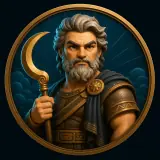
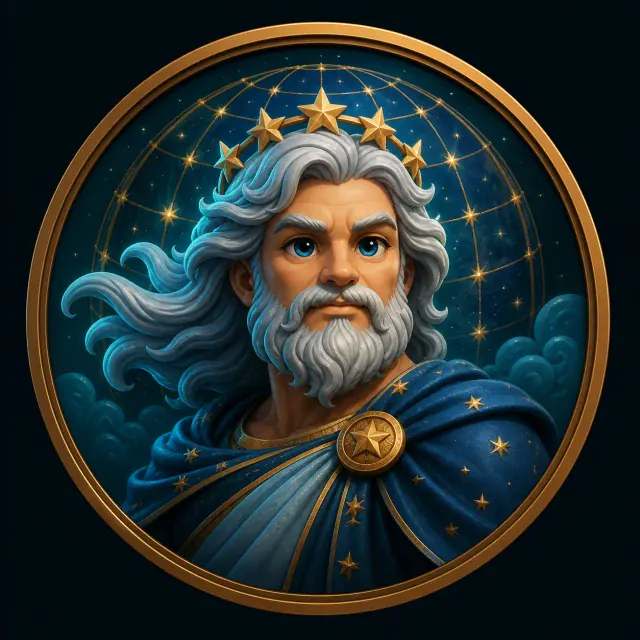
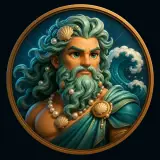
Illustrated portrait of Uranus

Portrait from the MythBranch atlas
Interpretive illustration, not an ancient likeness

Greek mythology research profile · cited sources

Uranus

Caelus · The sky as father and enclosing power

Uranus is the starry Sky generated by Gaia and made equal to her so that he covers Earth on every side. With Gaia he fathers the Titans, Cyclopes, and Hundred-Handers, but he hides children within her until Cronus attacks him with Gaia's sickle. His overthrow establishes the first major succession crisis and produces new beings from blood and sea foam.

Names · attributes · ancient evidence

Uranus: identity and historical contexts.

Ouranos is the visible heavens personified. Unlike Zeus, who rules the sky as an Olympian sovereign with thunderbolt, assembly, cult, and many stories, Uranus is the cosmic vault itself and belongs to an earlier narrative layer. His defining action is concealment: he prevents children from entering open space, making Gaia's body their prison. The myth imagines generation as pressure between earth below and sky above.

Roman Caelus is the closest linguistic and visual parallel, but later planetary Uranus is a modern astronomical namesake. The planet was named in the eighteenth century to extend a Greco-Roman family sequence beyond Saturn; it should not be confused with evidence that ancient Greeks worshipped a planet called Uranus. Visual representations of a male sky canopy can also overlap with Aether, zodiacal heavens, or Roman celestial personifications.

01Ouranos · Sky02Asteropētos · Starry03Eurychōros · Wide04Makros · High05Caelus · Roman heaven
01

Succession and the separation of earth and sky

Uranus forces his children back into Gaia, preventing a new generation from occupying the visible world. Gaia's sickle separates earth from sky and allows succession to proceed. The episode combines sexual violence, dynastic conflict, and cosmogonic separation; a summary limited to Cronus's accession omits that structure.
02

Uranus and the planet are different histories

Ancient observers knew the visible planets through gods such as Zeus/Jupiter and Cronus/Saturn, but Uranus is too faint for ordinary naked-eye recognition as a wandering planet. William Herschel's 1781 discovery and later naming created a new reception of the ancient genealogy. NASA's record belongs under modern naming, not ancient cult.

Texts · chronology · variant traditions

Selected ancient narratives involving Uranus.

Uranus's short narrative defines divine succession by making the first father's attempt to prevent change physically unbearable.

01

Hesiod · Theogony

Gaia produces an equal sky

Gaia generates starry Uranus without union, equal to herself and able to cover her on every side as a secure dwelling for the gods. Earth and sky begin as parent and child before becoming a reproductive pair. Their relation makes the cosmos both architecture and family.

Hesiodic tradition: Theogony ↗
02

First generation conflict

Uranus hides his children

Uranus hates the formidable children born with Gaia and places them in a hidden recess of Earth. Gaia groans under the burden, creates the adamant sickle, and asks the Titans for help. Cronus accepts the ambush while his siblings fear it.

Hesiodic tradition: Theogony ↗
03

First divine succession

Cronus separates sky from earth

Cronus strikes Uranus as he approaches Gaia. Drops of blood fall on Earth and eventually produce Erinyes, Giants, and Melian nymphs; the severed genitals reach the sea and generate Aphrodite in Hesiod's account. Uranus names his sons Titans in a hostile pun and withdraws from active rule.

Hesiodic tradition: Theogony ↗Pseudo-Apollodorus: Library of Greek Mythology ↗

Genealogical records and atlas relationships

Genealogical evidence and variant traditions.

The atlas shows Uranus as Gaia's child and partner, then connects their selected Titan children. That visual paradox follows Hesiod's genealogy rather than modern assumptions about family roles.

Genealogy note

Hesiod gives Gaia and Uranus twelve Titans, three Cyclopes, and three Hundred-Handers. The atlas includes only the children needed for its principal routes and should not be read as a complete offspring list.

Open the interactive branch ↗

Text · stage · screen · scholarship

Selected works concerning Uranus in later reception.

Each selected work treats this figure as its subject, title presence, principal voice, or central dramatic agent. Incidental appearances are excluded. The bibliography also avoids assigning the same representative title to multiple profiles except where a shared primary text is indispensable.

  1. late 8th–7th c. BCETheogony: The Separation of Sky and EarthCosmogonic poem
  2. 1555–57The Mutilation of Uranus by SaturnFresco program
  3. Modern scientific recordUranus: World of the Sideways SkyPlanetary dossier
01

Selected bibliography

Ancient succession

01 works
02

Selected bibliography

Visual reception

01 works
03

Selected bibliography

Modern naming

01 works

When modern book covers or publicity images are shown, they appear at small scale for identification and criticism; copyright remains with the named rights holders. Public-domain context images are explicitly labeled.

Sources and documentation

Primary texts, scholarship, and catalogue records.

Dates follow conventional scholarly ranges. Cover thumbnails identify modern editions; they do not represent the original material form of an ancient text. Links lead to university archives, publishers, and museum catalogues.

Ancient source

2
  1. 01TheogonyHesiodic tradition
    Verified text or catalogue record
    Theogony↗

    Hesiodic tradition · late 8th–7th c. BCE

    The complete early narrative of Uranus, Gaia, Cronus, and the first succession.
    Edition or recordGreek text and translation · Perseus Digital Library
  2. 02Library of Greek MythologyPseudo-Apollodorus
    Verified text or catalogue record
    Library of Greek Mythology↗

    Pseudo-Apollodorus · 1st–2nd c. CE

    Later mythographic organization of Uranus's children and overthrow.
    Edition or recordGreek text and translation · Perseus Digital Library

Academic study

1
  1. 01Succession Myth in Early Greek PoetryClassical scholarship trail
    Verified text or catalogue record
    Succession Myth in Early Greek Poetry↗

    Classical scholarship trail · Modern research

    Research pathway for Near Eastern parallels, poetic structure, and political readings.
    Edition or recordJSTOR indexed scholarship

Museum research

1
  1. 01Caelus and Uranus collection searchThe British Museum
    Verified text or catalogue record
    Caelus and Uranus collection search↗

    The British Museum · Collection research

    Linked object records and changing identifications of the sky personification.
    Edition or recordBritish Museum Collection Online

Family questions

Questions about Uranus's family.

Who are Uranus's parents?

In Hesiod, Gaia produces Uranus without a named partner.

Who are Uranus's children?

With Gaia he fathers the twelve Titans, three Cyclopes, and three Hundred-Handers in Hesiod's account.

Is the god Uranus the same as the planet?

The planet was named after the ancient sky god in modern astronomy, but it is not an ancient planetary cult identity.