PRIMORDIAL · 02
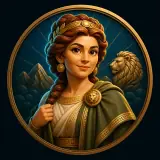
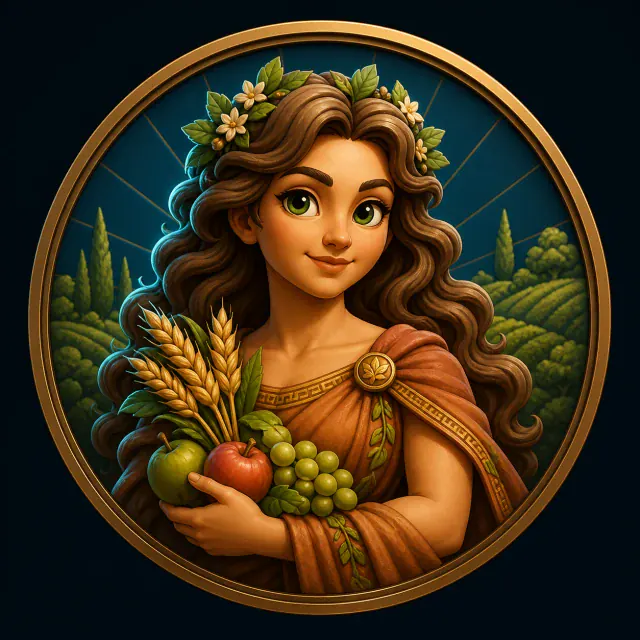
Illustrated portrait of Gaia

Portrait from the MythBranch atlas
Interpretive illustration, not an ancient likeness

Greek mythology research profile · cited sources

Gaia

Terra / Tellus · Living earth and ancestral mother

Gaia is the living Earth, a primordial power who generates the sky, mountains, sea, Titans, Giants, and many local lineages. She is never only a nurturing ‘Mother Nature.’ In Hesiod she plans the overthrow of Uranus, enables Cronus, later supports Zeus, and also produces forces that challenge Olympian rule. Cult and art make her a ground that nourishes, receives the dead, and can rise into view.

Names · attributes · ancient evidence

Gaia: identity and historical contexts.

Gaia's name is the ordinary poetic name for earth made divine. She can be invoked as broad-breasted, all-bearing, or kourotrophos, nourisher of children. Ancient images often show her emerging only partly from the soil, a visual grammar that marks her as the ground itself rather than a goddess simply standing upon it. Genealogy radiates from her because earth supplies the material and location of divine, human, and monstrous life.

Modern environmental language often uses Gaia as a symbol of planetary interdependence, especially after James Lovelock's Gaia hypothesis. That is an influential reception, not an ancient doctrine. Ancient Gaia has agency, anger, stratagems, prophetic knowledge, and dangerous offspring. She can defend a new order and then generate opposition to it; ‘earth mother’ should not flatten those conflicts into permanent benevolence.

01Gaia · Earth02Eurysternos · Broad-breasted03Pammetōr · Mother of all04Kourotrophos · Child-nourisher05Chthōn · Ground
01

Birth, violence, and succession

Gaia produces Uranus and then bears the Titans with him. When Uranus hides their children, she fashions the sickle and recruits Cronus to attack his father. The same earth later advises Rhea and Zeus. Succession is therefore not a simple march from primitive to civilized gods: it repeatedly depends on Gaia's knowledge, material, and willingness to redirect power.
02

How artists identify earth

A woman rising from below a scene, reclining beneath figures, holding fruit, or surrounded by children may be Gaia or the Roman Tellus, but context matters. Museum catalogues often preserve uncertainty between Gaia, local earth figures, and related fertility personifications. This page keeps the catalogue's wording rather than converting every maternal female into a definite portrait.

Texts · chronology · variant traditions

Selected ancient narratives involving Gaia.

Gaia's myths hold together cosmogony, succession, prophetic intelligence, and the costs of forcing children out of sight.

01

Hesiod · Theogony

Gaia bears sky, mountains, and sea

After Chaos, Gaia comes into being as the secure foundation of the immortals. Without sexual union she produces starry Uranus, the mountains, and Pontus; with Uranus she bears the Titans, Cyclopes, and Hundred-Handers. The poem turns geography into kinship while preserving differences among independent generation, union, and violent succession.

Hesiodic tradition: Theogony ↗
02

First divine succession

The sickle against Uranus

Uranus hates or fears the children born with Gaia and hides them within her. Distressed by confinement, Gaia makes an adamant sickle and asks her sons to act. Cronus alone agrees, ambushes Uranus, and severs his genitals. Blood falling on Gaia generates Erinyes, Giants, and ash-tree nymphs, while sea foam produces Aphrodite in Hesiod's version.

Hesiodic tradition: Theogony ↗
03

Titan succession

Gaia advises the Olympian future

When Cronus swallows his children, Gaia and Uranus help Rhea protect the youngest, Zeus. Later Gaia's counsel contributes to releasing imprisoned allies and winning the Titanomachy. Other traditions also make Gaia mother or supporter of Giants and Typhon, placing earth behind resistance to the order she helped establish.

Hesiodic tradition: Theogony ↗Pseudo-Apollodorus: Library of Greek Mythology ↗

Genealogical records and atlas relationships

Genealogical evidence and variant traditions.

Gaia has the densest ancestry in the atlas because earth generates regions, divine generations, and monsters. The displayed branch remains only a small selection of the descendants named by Hesiod and later mythographers.

Parents drawn in this atlas

00

No line of this type is drawn in the current atlas.

Chart-based siblings

00

No line of this type is drawn in the current atlas.

Genealogy note

The atlas shows Uranus and Pontus as children and several Titans beneath the Gaia–Uranus union. Hesiod also gives Gaia the mountains and many further descendants; local cult genealogies and later authors expand the network.

Open the interactive branch ↗

Text · stage · screen · scholarship

Selected works concerning Gaia in later reception.

Each selected work treats this figure as its subject, title presence, principal voice, or central dramatic agent. Incidental appearances are excluded. The bibliography also avoids assigning the same representative title to multiple profiles except where a shared primary text is indispensable.

  1. late 8th–7th c. BCETheogony: The Generations of GaiaCosmogonic poem
  2. AntiquityHomeric Hymn 30 to GaiaHymn
  3. 1979Gaia: A New Look at Life on EarthScience book
01

Selected bibliography

Ancient poetry

02 works
02

Selected bibliography

Modern ideas

01 works

When modern book covers or publicity images are shown, they appear at small scale for identification and criticism; copyright remains with the named rights holders. Public-domain context images are explicitly labeled.

Sources and documentation

Primary texts, scholarship, and catalogue records.

Dates follow conventional scholarly ranges. Cover thumbnails identify modern editions; they do not represent the original material form of an ancient text. Links lead to university archives, publishers, and museum catalogues.

Ancient source

2
  1. 01TheogonyHesiodic tradition
    Verified text or catalogue record
    Theogony↗

    Hesiodic tradition · late 8th–7th c. BCE

    Births of Uranus, Pontus, Titans, Giants, and Gaia's role in divine succession.
    Edition or recordGreek text and translation · Perseus Digital Library
  2. 02Library of Greek MythologyPseudo-Apollodorus
    Verified text or catalogue record
    Library of Greek Mythology↗

    Pseudo-Apollodorus · 1st–2nd c. CE

    Later synthesis of Gaia's descendants and conflicts around the Olympian order.
    Edition or recordGreek text and translation · Perseus Digital Library

Museum research

2
  1. 01Gaia collection authorityThe British Museum
    Verified text or catalogue record
    Gaia collection authority↗

    The British Museum · Collection research

    Museum biography and linked objects with Gaia identifications and catalogue debate.
    Edition or recordBritish Museum Collection Online
  2. 02Greek Art from Prehistoric to ClassicalThe Metropolitan Museum of Art
    Verified text or catalogue record
    Greek Art from Prehistoric to Classical↗

    The Metropolitan Museum of Art · 2000

    Context for reading Greek narrative objects without assuming they illustrate one literary text.
    Edition or recordMetPublications · open-access museum catalogue

Family questions

Questions about Gaia's family.

Who are Gaia's parents?

Hesiod presents Gaia as coming into being after Chaos without named parents. Other cosmogonies organize beginnings differently.

Who are Gaia's children?

Her major children include Uranus, the mountains, Pontus, the Titans, Cyclopes, Hundred-Handers, and many later beings through different unions and aftermaths.

Is Gaia the same as Mother Nature?

Gaia is an important ancestor of modern earth-mother imagery, but the ancient goddess has specific genealogical, cultic, political, and violent dimensions that ‘Mother Nature’ does not fully capture.