HERO · 23
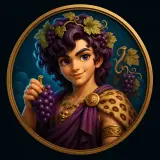
Illustrated portrait of Heracles

Portrait from the MythBranch atlas
Interpretive illustration, not an ancient likeness

Greek mythology research profile · cited sources

Heracles

Hercules · Suffering, strength, service & immortality

Heracles is the son of Zeus and the mortal Alcmene and the pre-eminent strongman of Greek heroic tradition. His narratives include combat with monsters, the establishment of routes and cults, the killing of his household during divinely sent madness, imposed labor, and eventual immortality. Roman Hercules acquired additional roles as protector, conqueror, and model of strenuous virtue. Later reception frequently addresses the relation between physical power, culpability, and restitution.

Names · attributes · ancient evidence

Heracles: identity and historical contexts.

Heracles means ‘glory of Hera,’ a bitterly meaningful name for the hero whom Hera persecutes and later receives into the divine family. The lion skin and club make him recognizable even without inscription. His Twelve Labors are not the whole life: infancy, madness, marriage, enslavement, friendships, wars, sexual violence, death, and apotheosis vary across epic, lyric, tragedy, comedy, local cult, and mythography. The page therefore separates famous sequence from one universal biography.

Ancient authors disagree about the order and number of labors, why Heracles serves Eurystheus, which family he kills, and how specific journeys unfold. Tragedy makes those differences central. Modern ‘hero's journey’ summaries can turn every act into moral progress, but Heracles also commits or enables terrible harm. Apotheosis does not erase victims, and a serious profile must hold benefactor, sufferer, aggressor, and god together.

01Alexikakos · Averter of evil02Kallinikos · Gloriously victorious03Sōtēr · Savior04Melampygos · Black-bottomed05Hērōs Theos · Hero-god
01

The labors map a world as much as a personality

Nemea, Lerna, Erymanthus, Crete, Thrace, the western edge, the underworld, and other sites become connected through compulsory travel. Heracles moves monsters, animals, and objects across boundaries. Local communities could attach themselves to his route, so the labor cycle is also a geography of claims and cultural contact.


02

Madness cannot be reduced to motivation

Euripides places the killing of wife and children after Heracles returns from the underworld, while other accounts place a family murder before the labors. The different sequence changes the ethical shape of service: punishment may follow crime, or catastrophe may destroy the reward expected after heroic completion. Neither version is a footnote.

Texts · chronology · variant traditions

Selected ancient narratives involving Heracles.

Heracles's defining stories move from persecuted birth through compulsory achievement to grief, destructive clothing, death, and divine reception.

01

Heroic infancy

The snakes in the cradle

Hera sends serpents against the infant Heracles and his twin Iphicles. Heracles grips and kills them, revealing impossible strength before social identity can form. Versions differ in who sends the snakes and how the adults respond, but the scene becomes an enduring visual shorthand for innate heroic power.

Pseudo-Apollodorus: Library of Greek Mythology ↗
02

Cycle of service

The labors begin under Eurystheus

After family catastrophe or through a divinely structured penalty, Heracles serves King Eurystheus. He kills or captures the Nemean Lion, Hydra, Ceryneian Hind, Erymanthian Boar, birds, bull, mares, cattle, and Cerberus, cleans the Augean stables, and obtains the Amazon's belt and Hesperidean apples. Lists and order vary.

Pseudo-Apollodorus: Library of Greek Mythology ↗
03

Euripides · Heracles

Heracles returns to a destroyed household

Heracles saves his family from the usurper Lycus, but Hera sends Madness, and he kills his wife and children while imagining enemies. When sanity returns, Theseus prevents suicide and offers a place in Athens. The play ends with dependence, pollution, and friendship rather than triumphant self-sufficiency.

Euripides: Heracles ↗
04

Marriage and death cycle

Achelous, Deianira, and the poisoned gift

Heracles wins Deianira by wrestling the river Achelous. Later the centaur Nessus attempts violence against her and, dying from Heracles's poisoned arrow, falsely claims his blood will preserve love. Deianira eventually sends a treated robe that burns Heracles' body.

Sophocles: Women of Trachis ↗

Genealogical records and atlas relationships

Genealogical evidence and variant traditions.

The atlas connects Heracles to Zeus but cannot draw Alcmene, Amphitryon, Megara, Deianira, Hyllus, and the hero's vast mortal and divine family. This page keeps biological, foster, marital, and cult relations distinct.

Unions drawn in this atlas

00

No line of this type is drawn in the current atlas.

Children drawn in this atlas

00

No line of this type is drawn in the current atlas.

Genealogy note

Alcmene is Heracles's mother; Amphitryon is her husband and the hero's social father; Zeus is biological father in the dominant myth. Numerous children and marriages vary by region, and apotheosis adds Hebe as divine wife.

Open the interactive branch ↗

Text · stage · screen · scholarship

Selected works concerning Heracles in later reception.

Each selected work treats this figure as its subject, title presence, principal voice, or central dramatic agent. Incidental appearances are excluded. The bibliography also avoids assigning the same representative title to multiple profiles except where a shared primary text is indispensable.

  1. c. 416 BCEHeraclesTragedy
  2. 5th c. BCEWomen of TrachisTragedy
  3. 1944Hercules, My ShipmateHistorical myth novel
01

Selected bibliography

Ancient drama

02 works
02

Selected bibliography

Modern novels

01 works

When modern book covers or publicity images are shown, they appear at small scale for identification and criticism; copyright remains with the named rights holders. Public-domain context images are explicitly labeled.

Sources and documentation

Primary texts, scholarship, and catalogue records.

Dates follow conventional scholarly ranges. Cover thumbnails identify modern editions; they do not represent the original material form of an ancient text. Links lead to university archives, publishers, and museum catalogues.

Ancient source

3
  1. 01Library of Greek MythologyPseudo-Apollodorus
    Verified text or catalogue record
    Library of Greek Mythology↗

    Pseudo-Apollodorus · 1st–2nd c. CE

    The fullest compact synthesis of birth, labors, marriages, descendants, death, and apotheosis.
    Edition or recordGreek text and translation · Perseus Digital Library
  2. 02HeraclesEuripides
    Verified text or catalogue record
    Heracles↗

    Euripides · c. 416 BCE

    Madness, family murder, recognition, and Theseus's intervention.
    Edition or recordGreek text and translation research · Perseus
  3. 03Women of TrachisSophocles
    Verified text or catalogue record
    Women of Trachis↗

    Sophocles · 5th c. BCE

    Deianira, Nessus, Iole, the robe, and Heracles' mortal death.
    Edition or recordGreek text and translation research · Perseus

Academic study

1
  1. 01HeraklesG. Karl Galinsky
    Verified text or catalogue record
    Herakles↗

    G. Karl Galinsky · 1972

    Major reception study of the hero across Greek, Roman, and later culture.
    Edition or recordScholarly research trail · JSTOR

Museum research

1
  1. 01Heracles / Hercules collection researchThe British Museum
    Verified text or catalogue record
    Heracles / Hercules collection research↗

    The British Museum · Collection research

    Large object corpus showing labor iconography, attributes, cult, and Roman transformation.
    Edition or recordBritish Museum Collection Online

Family questions

Questions about Heracles's family.

Who are Heracles's parents?

Heracles is the son of Zeus and the mortal Alcmene; Amphitryon is Alcmene's husband and his social father.

Why did Heracles perform the Twelve Labors?

Major traditions connect his service to Eurystheus with divine planning and atonement after a family killing, but the exact sequence and motivation vary.

Is Hercules the same as Heracles?

Hercules is the Roman name and later reception of Greek Heracles, with significant additions in Roman cult, ethics, politics, and art.