OLYMPIAN · 05
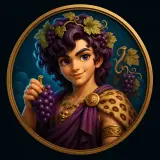
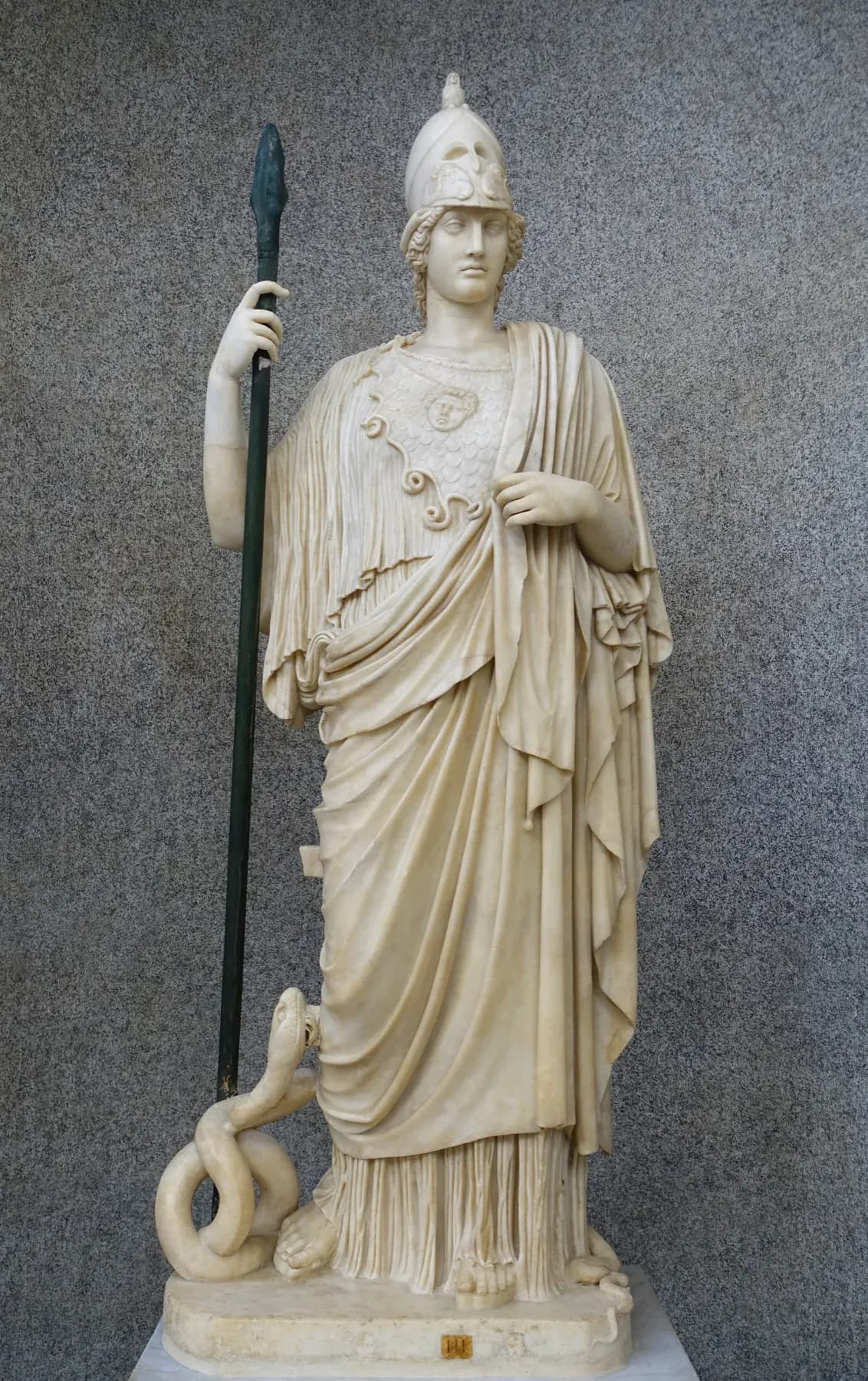
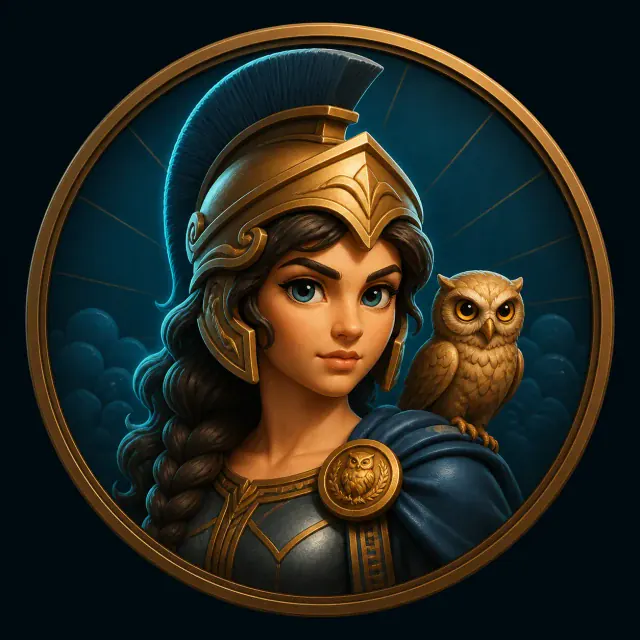
Illustrated portrait of Athena

Portrait from the MythBranch atlas
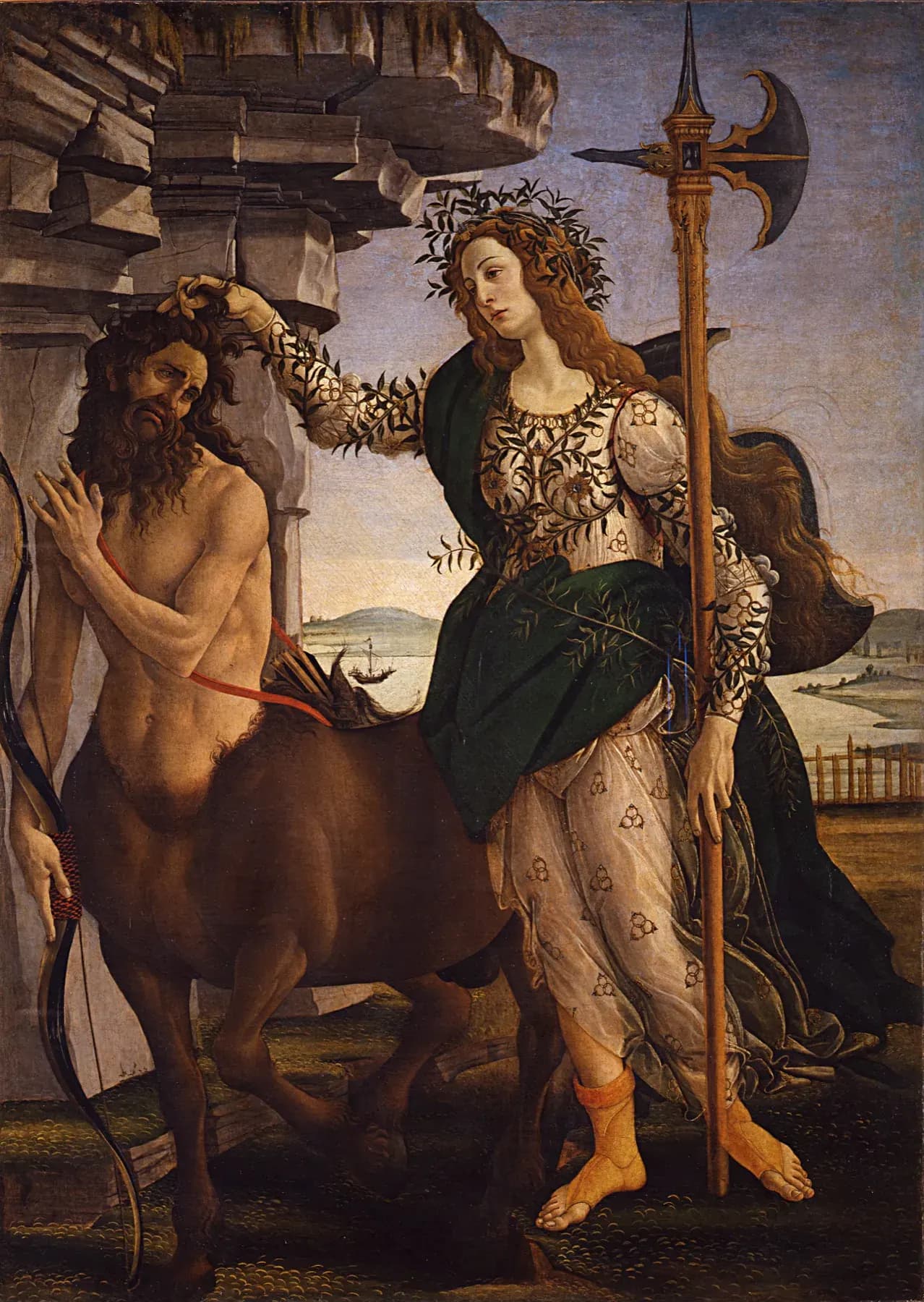
Interpretive illustration, not an ancient likeness

Greek deity research profile · cited sources

Athena

Minerva · Strategy, skilled craft & civic intelligence

Athena is the Olympian goddess of strategic war, skilled making, counsel, and the civic life of Athens. Born from Zeus yet repeatedly allied with mortal heroes, she joins force to judgment: her spear and aegis defend cities, while weaving, shipbuilding, law, and persuasive planning show intelligence becoming practical form.

Names · attributes · ancient evidence

Athena: identity and historical contexts.

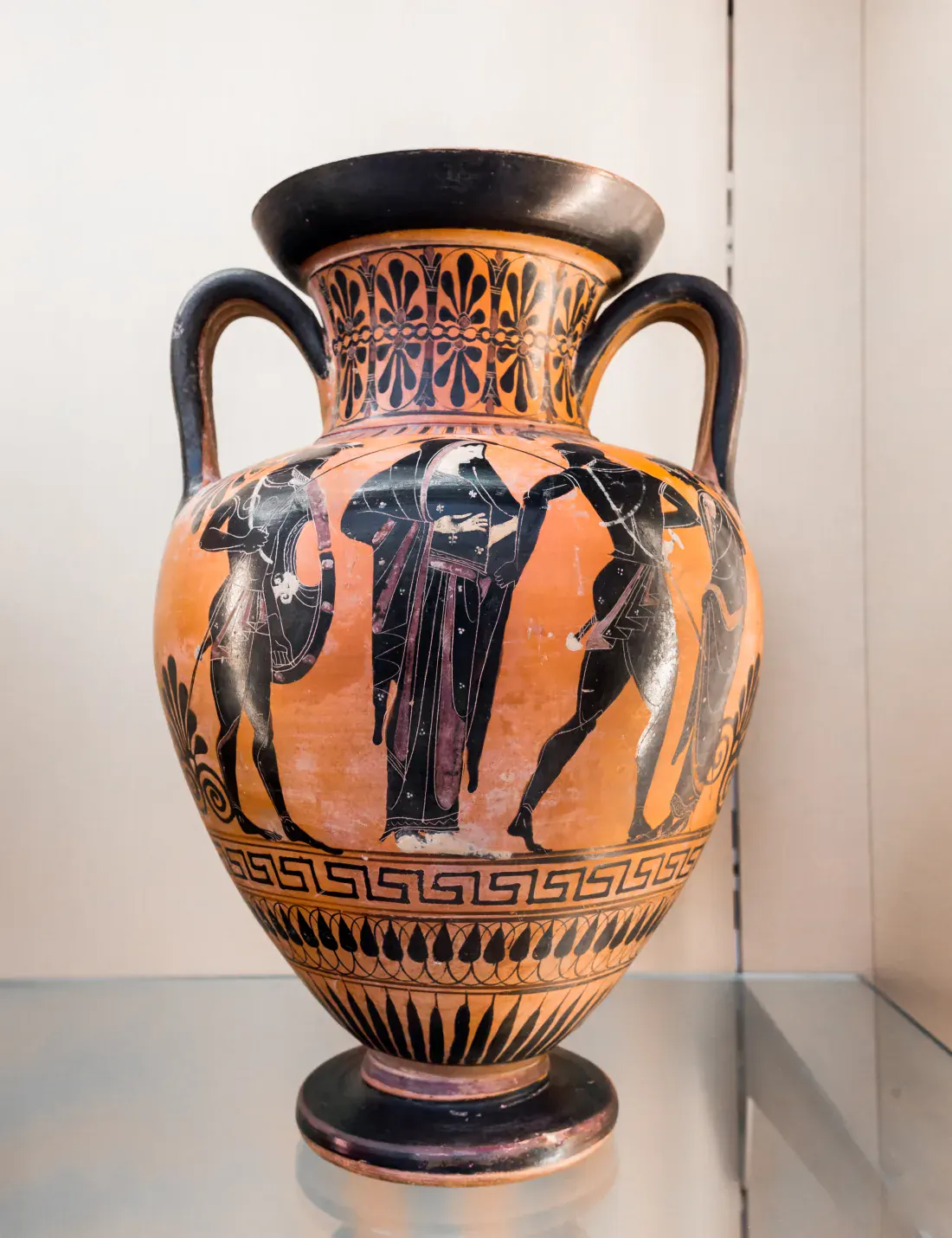
Athena’s ancient identity is unusually civic. At Athens she is Polias, guardian of the city; as Ergane she presides over work and craft; as Promachos she fights before the line. The Panathenaic festival, the woven peplos offered to her, and the architecture of the Acropolis bind religion to citizenship, labor, memory, and display. Her domain is not abstract knowledge but intelligence tested through institutions, bodies, objects, and decisions.

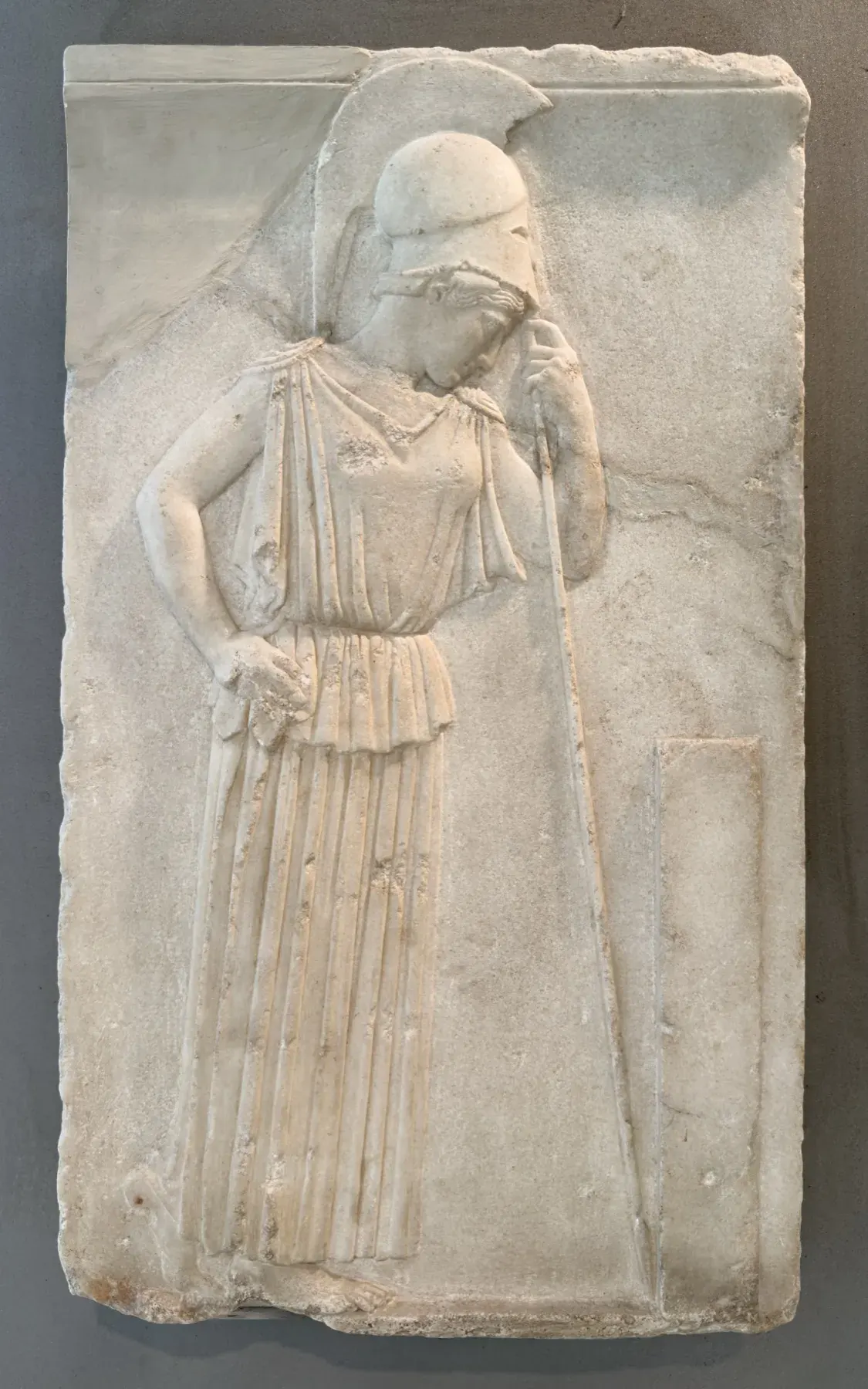
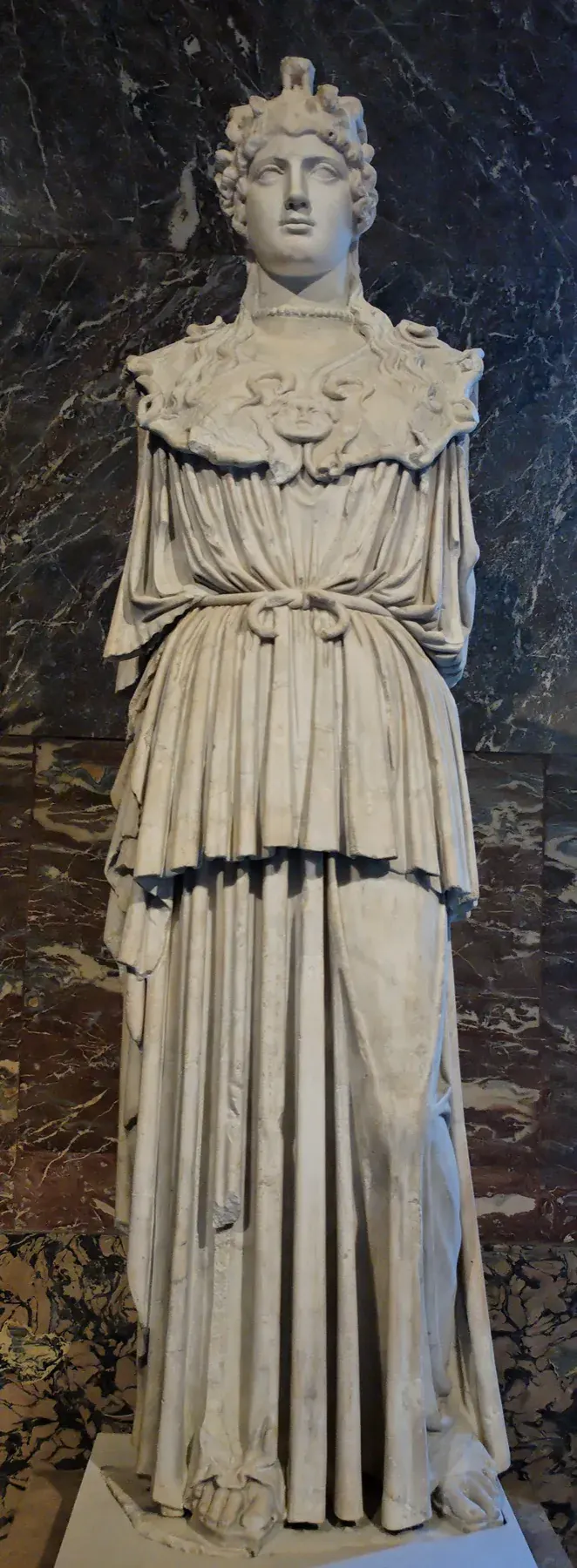
Minerva is Athena’s closest Roman equivalent, but Roman Minerva developed within the Capitoline triad and Roman systems of craft and state religion. Later art also turned Athena into a general allegory of wisdom, chastity, empire, or reason. This profile therefore distinguishes Greek cult titles, literary episodes, Roman identification, and post-antique allegory instead of treating the helmeted woman as a timeless symbol with one meaning.

01Polias · Of the city02Promachos · Front-line fighter03Ergane · Worker04Parthenos · Maiden05Glaukopis · Bright/grey-eyed

Texts · chronology · variant traditions

Selected ancient narratives involving Athena.

Athena does not solve every conflict by force. Across genealogy, civic contest, epic, and tragedy, her characteristic power is to turn uncertainty into a plan, an institution, or an object that can endure.

01

Olympian succession

Born from the head of Zeus

After Zeus swallows Metis, Athena emerges from his head fully armed. Hesiod’s genealogy makes the birth part of a succession crisis: Metis was fated to bear extraordinary children, and Zeus attempts to contain that future within himself.


Hesiod: Theogony ↗Susan Deacy: Athena ↗
02

Civic foundation

The contest for Athens

Athenian tradition placed Athena and Poseidon in competition for the land. Poseidon’s mark and Athena’s olive both remained on the Acropolis, although Athena became the city’s patron and gave it her name.

Pausanias: Description of Greece ↗Susan Deacy: Athena ↗
03

Heroic quest

Perseus and the Gorgon

Athena helps Perseus approach Medusa through reflection rather than direct sight and later receives the Gorgon’s head on her aegis. Mythography varies the exact equipment and sequence, but counsel and controlled vision remain central.

Pseudo-Apollodorus: Library of Greek Mythology ↗
04

Trojan War and homecoming

Patron of Odysseus

In the Odyssey Athena protects Telemachus, disguises herself to advise him, helps Odysseus return, and manages the recognition scenes that restore his household. Her support rewards flexible speech, endurance, and planning rather than simple obedience.

Homeric tradition: Odyssey ↗
05

Roman literary reception

Arachne and the danger of mastery

Ovid’s Metamorphoses tells how the superb weaver Arachne challenges Minerva, produces a technically flawless tapestry exposing divine sexual violence, and is transformed into a spider after the goddess destroys the work.

Ovid: Metamorphoses ↗
06

Oresteia · Eumenides

Athena founds a court

When the Furies pursue Orestes, Athena convenes Athenian jurors, casts the deciding vote, and negotiates a place of honor for the defeated goddesses. The cycle ends through a new civic procedure rather than annihilation.

Aeschylus: Eumenides ↗Susan Deacy: Athena ↗

Genealogical records and atlas relationships

Genealogical evidence and variant traditions.

The atlas emphasizes the Zeus line and Athena’s position among divine siblings. Her myths create durable ties to heroes, cities, and crafts without requiring marriage or children as the organizing center of her identity.

Unions drawn in this atlas

00

No line of this type is drawn in the current atlas.

Children drawn in this atlas

00

No line of this type is drawn in the current atlas.

Genealogy note

The tree draws Athena as a daughter of Zeus. Hesiod makes Metis her mother, but that maternal line is not shown in the current compact atlas. Athena’s virginity and lack of a conventional household are important ancient features; heroic patronage is therefore discussed as alliance, never mislabeled as genealogy.

Open the interactive branch ↗

Text · stage · screen · scholarship

Selected works concerning Athena in later reception.

Selections prioritize works in which Athena’s choices shape the form of the story. Later adaptations are read for what they change, while scholarship and museum evidence remain separate from fiction.

  1. c. 700 BCETheogonyThe armed birth enters divine genealogy.
  2. 5th c. BCEEumenidesAthena builds a civic court.
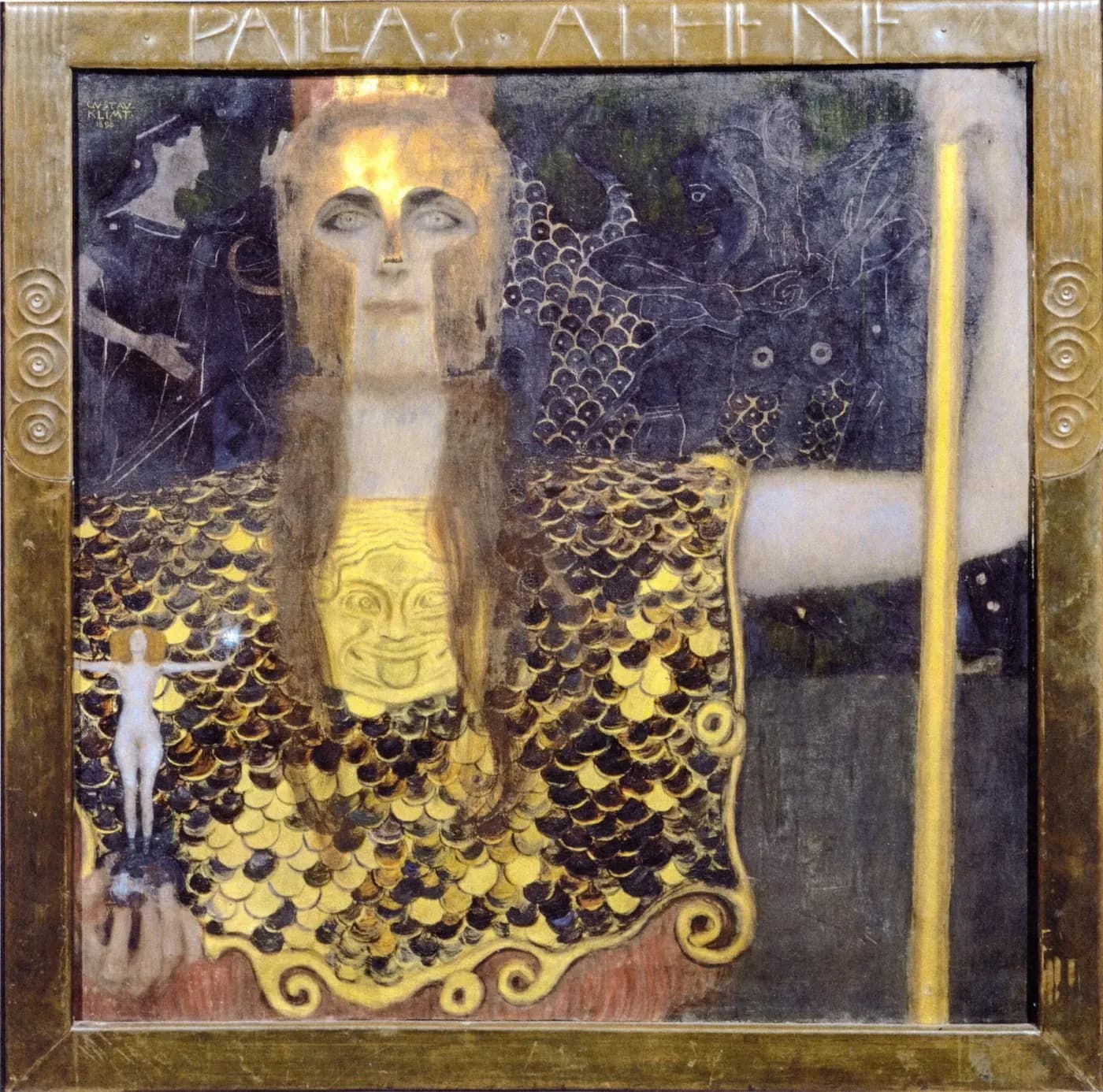
  3. 1898Pallas AtheneKlimt recasts the goddess for modern Vienna.
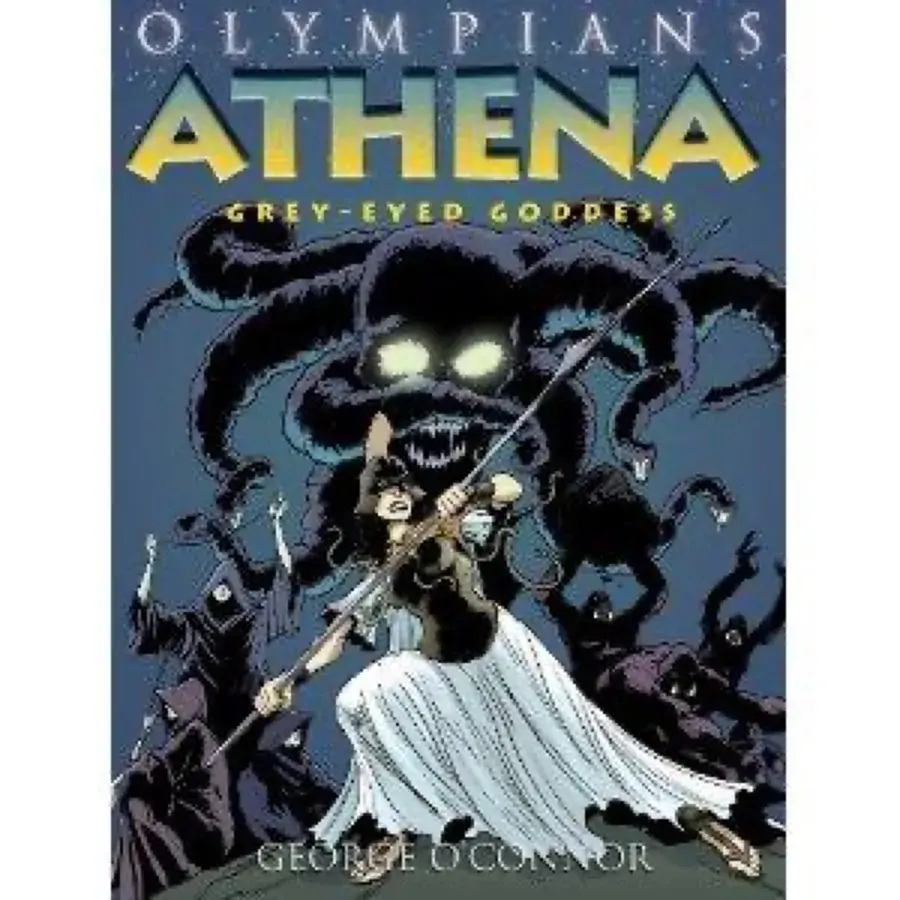
  4. 2010Olympians: AthenaA graphic biography returns Athena to the title role.
01

Selected bibliography

Ancient text & drama

02 works
02

Selected bibliography

Modern adaptation

02 works
03

Selected bibliography

Books & scholarship

02 works

When modern book covers or publicity images are shown, they appear at small scale for identification and criticism; copyright remains with the named rights holders. Public-domain context images are explicitly labeled.

Sources and documentation

Primary texts, scholarship, and catalogue records.

Dates follow conventional scholarly ranges. Cover thumbnails identify modern editions; they do not represent the original material form of an ancient text. Links lead to university archives, publishers, and museum catalogues.

Ancient source

6
  1. 01TheogonyHesiod
    Verified text or catalogue record
    Theogony↗

    Hesiod · c. 700 BCE

    Metis, succession, and Athena’s birth from Zeus.
    Edition or recordM. L. West translation · Oxford World’s Classics
  2. 02OdysseyHomeric tradition
    Verified text or catalogue record
    Odyssey↗

    Homeric tradition · late 8th–early 7th c. BCE

    Athena as counselor, disguiser, and protector of the homecoming.
    Edition or recordRobert Fagles translation · Penguin Classics
  3. 03Library of Greek MythologyPseudo-Apollodorus
    Verified text or catalogue record
    Library of Greek Mythology↗

    Pseudo-Apollodorus · 1st–2nd c. CE

    A late mythographic organization of Athena’s heroic interventions.
    Edition or recordRobin Hard translation · Oxford World’s Classics
  4. 04Description of GreecePausanias
    Verified text or catalogue record
    Description of Greece↗

    Pausanias · 2nd c. CE

    Athenian monuments, cults, and the contest with Poseidon.
    Edition or recordPeter Levi translation · Penguin Classics
  5. 05EumenidesAeschylus
    Verified text or catalogue record
    Eumenides↗

    Aeschylus · 458 BCE

    Athena founds a court and negotiates the Furies’ new civic role.
    Edition or recordRobert Fagles translation · Penguin Classics
  6. 06MetamorphosesOvid
    Verified text or catalogue record
    Metamorphoses↗

    Ovid · 8 CE

    The Roman literary account of Minerva and Arachne.
    Edition or recordDavid Raeburn translation · Penguin Classics

Academic study

1
  1. Cover of Athena by Susan DeacyRoutledge
    Athena↗

    Susan Deacy · 2008

    A modern survey of myth, cult, civic identity, art, and reception.
    Edition shownSusan Deacy · Routledge, 2008

Museum research

1
  1. 01Greek Art from Prehistoric to ClassicalThe Metropolitan Museum of Art
    Verified text or catalogue record
    Greek Art from Prehistoric to Classical↗

    The Metropolitan Museum of Art · 2000

    Museum-authored context for Greek materials, chronology, ritual, and visual conventions.
    Edition or recordMichael Norris · The Metropolitan Museum of Art

Family questions

Questions about Athena's family.

Who are Athena’s parents?

Hesiod says Athena is the daughter of Zeus and Metis. Zeus swallows the pregnant Metis, and Athena later emerges armed from his head.

What is Athena the goddess of?

Athena is associated with strategic warfare, civic protection, practical intelligence, skilled craft, weaving, counsel, and heroic patronage.

Is Minerva exactly the same as Athena?

Minerva is Athena’s closest Roman equivalent, but Roman cult, the Capitoline triad, and later allegory gave Minerva distinct meanings.

Why does Athena have no mother in some summaries?

Athena is often described as born from Zeus alone because she emerges from his head, but Hesiod’s genealogy explicitly makes Metis her mother.