OLYMPIAN · 10
Illustrated portrait of Aphrodite

Portrait from the MythBranch atlas
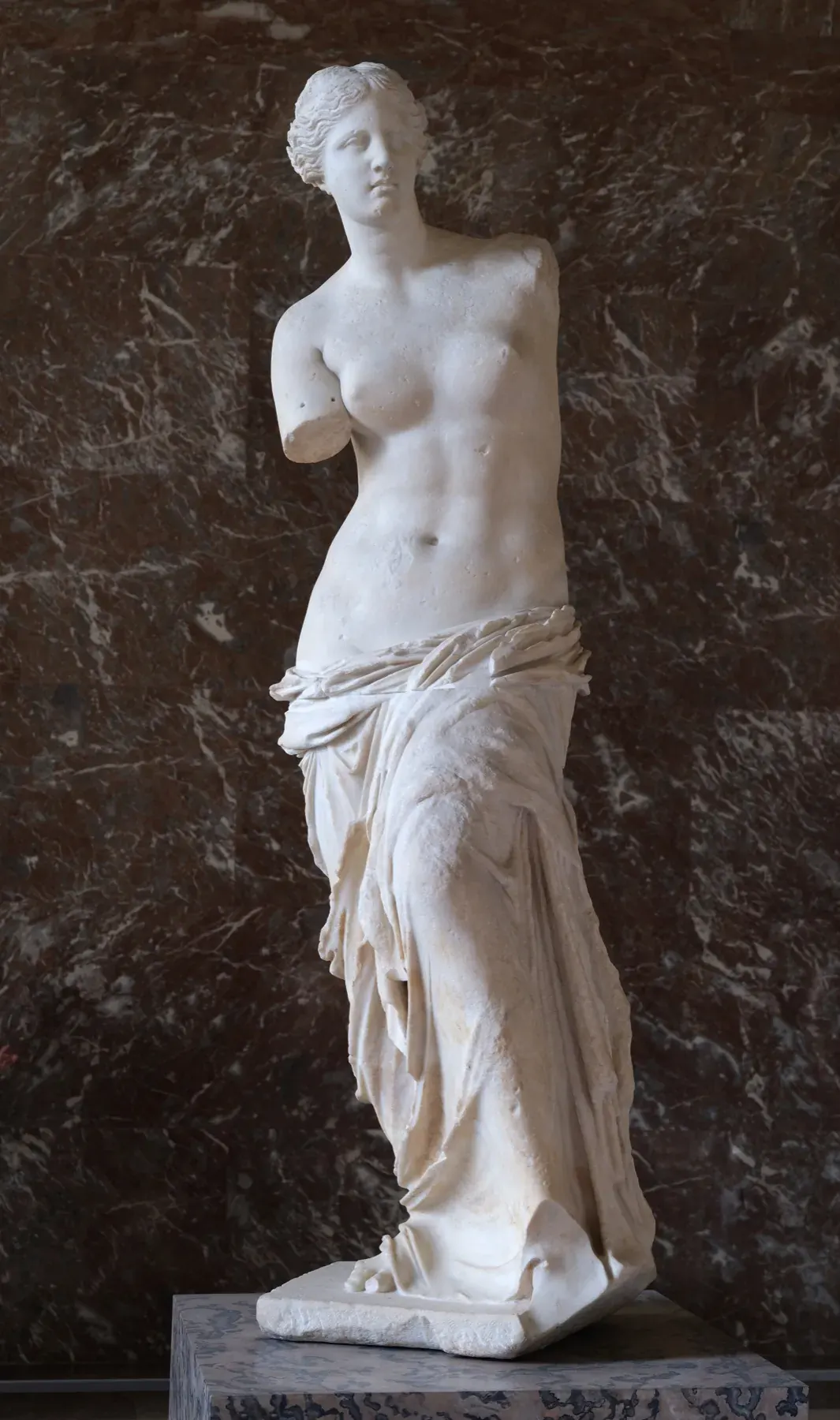
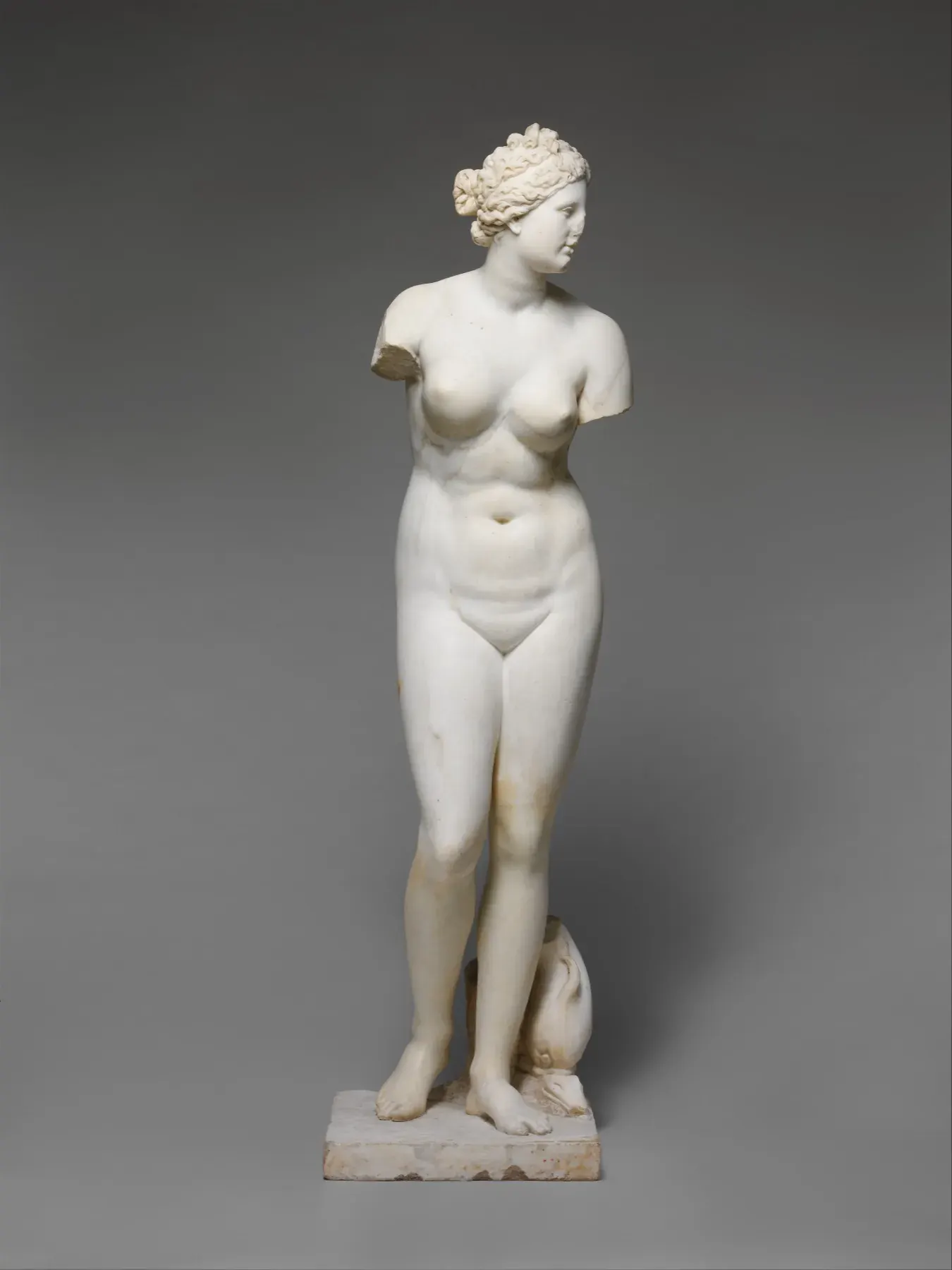
Interpretive illustration, not an ancient likeness

Greek deity research profile · cited sources

Aphrodite

Venus · Desire, beauty, persuasion & generative power

Aphrodite is the goddess whose power makes bodies, gods, and communities enter binding relations of desire. Beauty is one expression of that force, not its limit: poetry connects her with persuasion, sexuality, marriage, birth, seafaring, civic identity, and even war, while her two major birth traditions refuse a single tidy place in the Olympian family.

Names · attributes · ancient evidence

Aphrodite: identity and historical contexts.

Aphrodite’s worship was geographically and functionally diverse. Cyprus and Cythera anchor major origin traditions; Ourania, Pandemos, and local titles distinguish cult settings rather than simple moral ranks. Garlands, perfume, gold, mirrors, doves, and naked or elaborately dressed bodies make attraction visible, while poetry shows that her power can create reciprocity, fracture households, redirect war, or overwhelm the goddess herself.

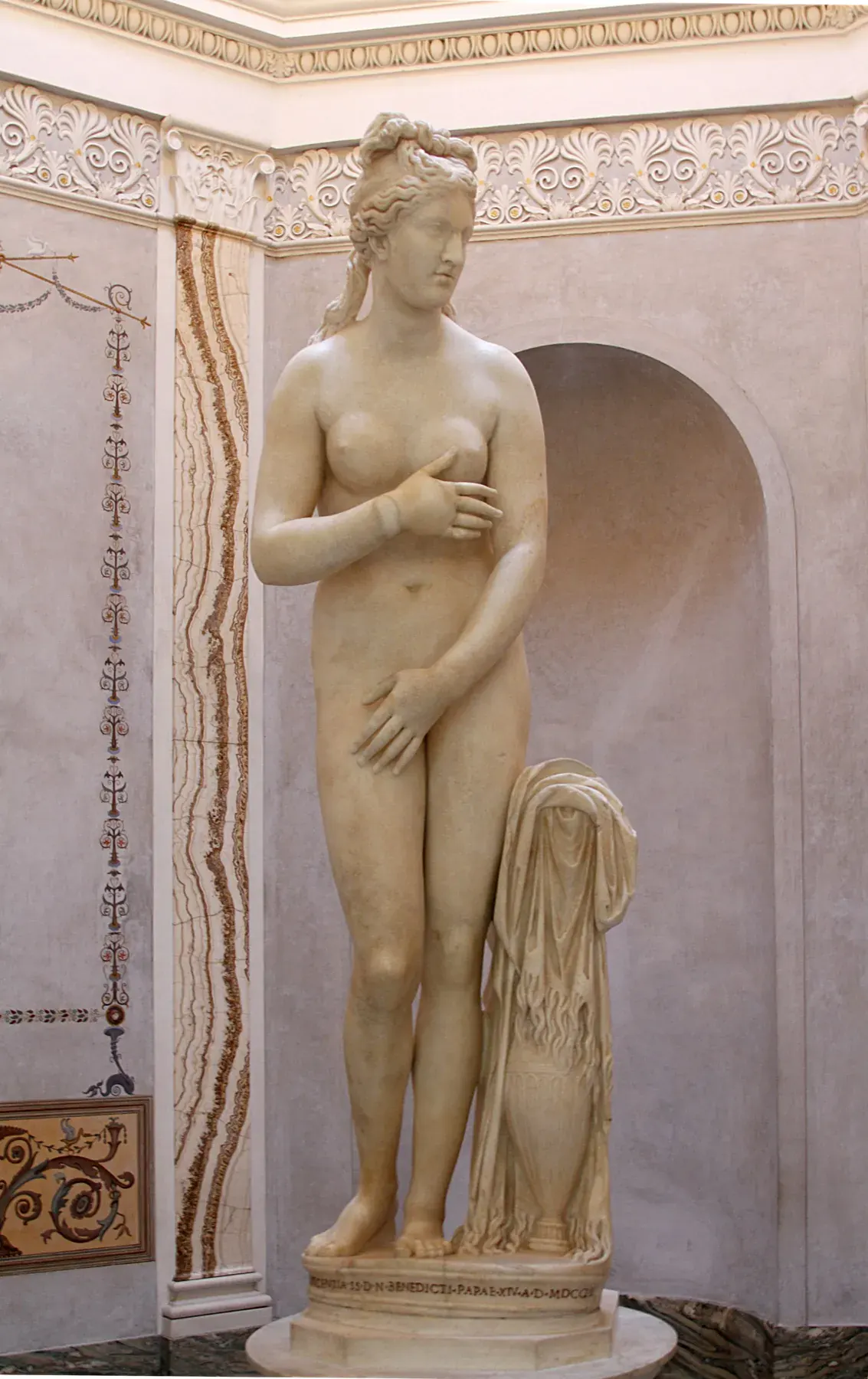
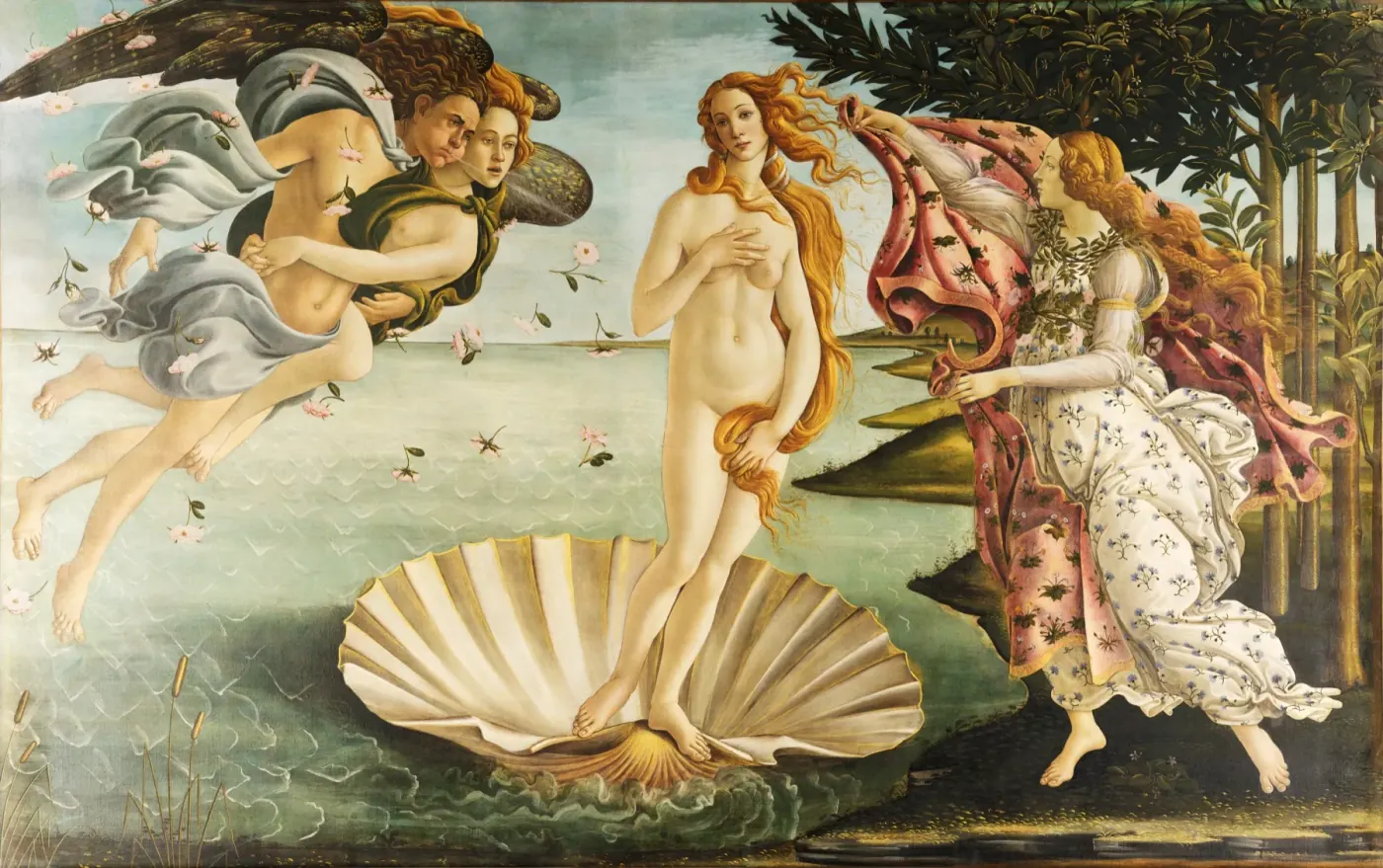
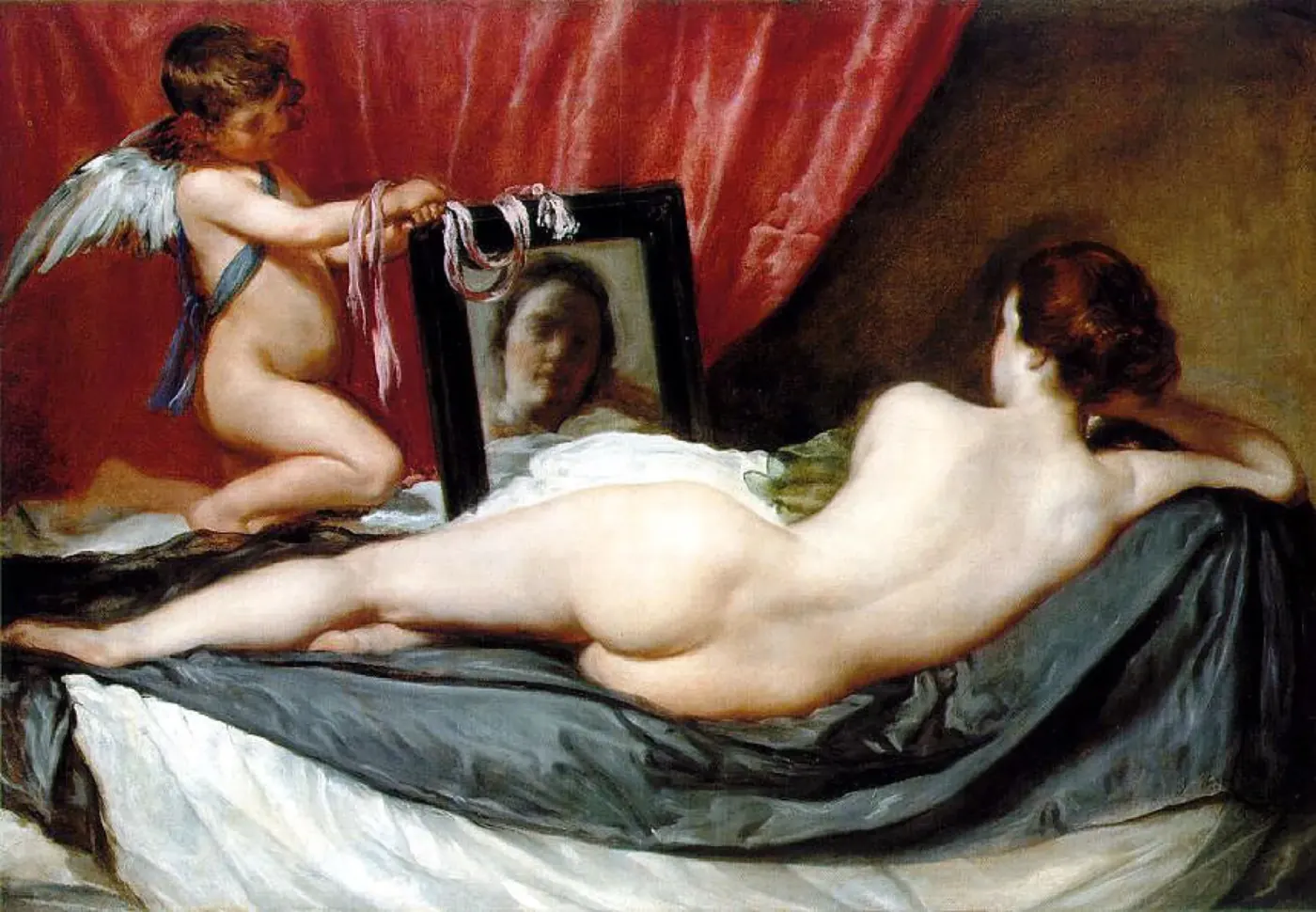
Hesiod makes Aphrodite emerge from sea foam after the severed body of Uranus reaches the water; the Iliad calls her a daughter of Zeus and Dione. Both are ancient and neither should be quietly deleted. Venus is the closest Roman equivalent, but Roman Venus also became an ancestor of the Julian line and a figure of imperial, civic, and military identity. Later European nudes belong to that reception history, not to a single Greek cult image.

01Kypris · Cyprian02Kythereia · Of Cythera03Ourania · Heavenly04Pandemos · Of all the people05Philommeidēs · Smile-loving

Texts · chronology · variant traditions

Selected ancient narratives involving Aphrodite.

The selection covers her two principal birth traditions, divine and mortal relationships, comic exposure, war, and mourning. In these accounts, desire affects genealogy, political conflict, and social obligation.

01

Cosmogonic generation

The sea-foam birth

In Hesiod, Aphrodite forms around the severed genitals of Uranus after they fall into the sea. She approaches Cythera and Cyprus accompanied by Eros and Desire, entering the divine order as a fully potent power rather than a child raised on Olympus.
Hesiod: Theogony ↗Monica S. Cyrino: Aphrodite ↗
02

Trojan War tradition

Daughter of Zeus and Dione

The Iliad gives a different parentage. Aphrodite is wounded while rescuing Aeneas and retreats to her mother Dione, who consoles her by recalling other gods injured through mortal conflict.

Homeric tradition: Iliad ↗Monica S. Cyrino: Aphrodite ↗
04

Homeric Hymn to Aphrodite

Anchises and the limit placed on gods

Zeus makes Aphrodite desire the mortal Anchises. Disguised as a young woman, she seduces him, reveals her divinity, and foretells the birth of Aeneas while warning Anchises not to boast of their union.

Anonymous Greek poet: Homeric Hymn to Aphrodite ↗
05

Olympian household comedy

The invisible net

In the Odyssey, Hephaestus discovers Aphrodite and Ares together and traps them in a nearly invisible net before the assembled gods. Poseidon negotiates the release after guaranteeing compensation.

Homeric tradition: Odyssey ↗
06

Greek and Roman reception

Adonis and grief

Traditions connect Aphrodite with the beautiful mortal Adonis, whose death produces divine grief and ritual lament. Ovid’s Roman version elaborates her attempt to warn him away from dangerous hunting.

Ovid: Metamorphoses ↗Monica S. Cyrino: Aphrodite ↗

Genealogical records and atlas relationships

Genealogical evidence and variant traditions.

The interactive atlas chooses the Zeus-and-Dione line because it needs a visible navigational branch. The page preserves the equally ancient Hesiodic sea birth, showing where diagrammatic clarity stops and source variation begins.

Parents drawn in this atlas

00

No line of this type is drawn in the current atlas.

Chart-based siblings

00

No line of this type is drawn in the current atlas.

Unions drawn in this atlas

00

No line of this type is drawn in the current atlas.

Children drawn in this atlas

00

No line of this type is drawn in the current atlas.

Genealogy note

The chart draws Aphrodite as a daughter of Zeus and Dione and connects her to Ares and their son Eros. Hesiod’s Theogony instead gives her no ordinary parents. Hephaestus is her husband in the Odyssey’s comic song, but later genealogies and modern charts combine unions differently; line absence is never evidence of a universal ancient claim.

Open the interactive branch ↗

Text · stage · screen · scholarship

Selected works concerning Aphrodite in later reception.

These works keep the goddess or her Roman counterpart at the narrative center. Their different genres expose a tension repeated across reception: the personification of desire is herself a desiring, vulnerable agent.

  1. 7th–6th c. BCEHomeric Hymn to AphroditeThe goddess becomes subject to desire.
  2. c. 600 BCESappho Fragment 1A speaker summons Aphrodite as intimate ally.
  3. 1593Venus and AdonisShakespeare gives Venus a long persuasive voice.
  4. 2014Olympians: AphroditeA graphic title role joins multiple myths.
01

Selected bibliography

Ancient poetry

02 works
02

Selected bibliography

Stage & literary reception

02 works
03

Selected bibliography

Books & scholarship

02 works

When modern book covers or publicity images are shown, they appear at small scale for identification and criticism; copyright remains with the named rights holders. Public-domain context images are explicitly labeled.

Sources and documentation

Primary texts, scholarship, and catalogue records.

Dates follow conventional scholarly ranges. Cover thumbnails identify modern editions; they do not represent the original material form of an ancient text. Links lead to university archives, publishers, and museum catalogues.

Ancient source

6
  1. 01TheogonyHesiod
    Verified text or catalogue record
    Theogony↗

    Hesiod · c. 700 BCE

    The sea birth and Aphrodite’s place in cosmogony.
    Edition or recordM. L. West translation · Oxford World’s Classics
  2. 02IliadHomeric tradition
    Verified text or catalogue record
    Iliad↗

    Homeric tradition · late 8th–early 7th c. BCE

    Aphrodite as daughter of Zeus and Dione, rescuer of Paris and Aeneas.
    Edition or recordRobert Fagles translation · Penguin Classics
  3. 03OdysseyHomeric tradition
    Verified text or catalogue record
    Odyssey↗

    Homeric tradition · late 8th–early 7th c. BCE

    The song of Aphrodite, Ares, Hephaestus, and the net.
    Edition or recordRobert Fagles translation · Penguin Classics
  4. 04Homeric Hymn to AphroditeAnonymous Greek poet
    Verified text or catalogue record
    Homeric Hymn to Aphrodite↗

    Anonymous Greek poet · 7th–6th c. BCE

    Aphrodite, Anchises, and the mortal limit placed on divine desire.
    Edition or recordMichael Crudden translation · Oxford World’s Classics
  5. 05Library of Greek MythologyPseudo-Apollodorus
    Verified text or catalogue record
    Library of Greek Mythology↗

    Pseudo-Apollodorus · 1st–2nd c. CE

    Genealogies and the Judgment of Paris tradition.
    Edition or recordRobin Hard translation · Oxford World’s Classics
  6. 06MetamorphosesOvid
    Verified text or catalogue record
    Metamorphoses↗

    Ovid · 8 CE

    Roman reception of Venus, Adonis, Pygmalion, and transformation.
    Edition or recordDavid Raeburn translation · Penguin Classics

Academic study

1
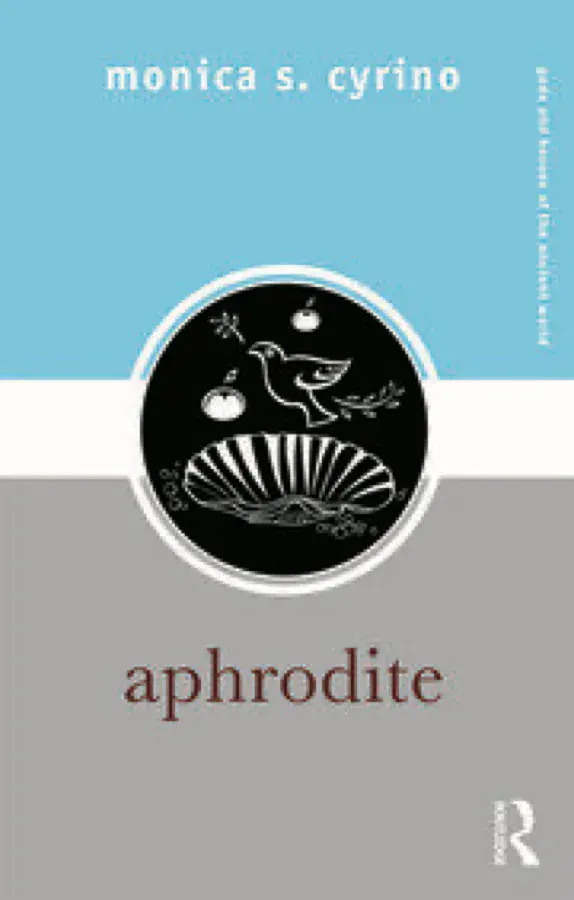
  1. Aphrodite by Monica Cyrino coverRoutledge
    Aphrodite↗

    Monica S. Cyrino · 2010

    A comprehensive survey of ancient evidence and modern reception.
    Edition shownMonica S. Cyrino · Routledge, 2010

Museum research

1
  1. 01Greek Art from Prehistoric to ClassicalThe Metropolitan Museum of Art
    Verified text or catalogue record
    Greek Art from Prehistoric to Classical↗

    The Metropolitan Museum of Art · 2000

    Material and visual context for Greek religious art.
    Edition or recordMichael Norris · The Metropolitan Museum of Art

Family questions

Questions about Aphrodite's family.

Who are Aphrodite’s parents?

Ancient sources disagree. Hesiod makes her emerge from sea foam after Uranus’s castration; the Iliad calls her a daughter of Zeus and Dione.

Who were Aphrodite's siblings?

The answer depends on the birth tradition. In Hesiod's sea-foam account, Aphrodite has no ordinary parents and therefore no fixed sibling set. In the Iliad's Zeus-and-Dione genealogy, she belongs to Zeus's wider family and has many paternal half-siblings rather than one universally agreed list.

What is Aphrodite the goddess of?

Aphrodite governs sexual desire, attraction, beauty, persuasion, generative union, and the social or political bonds disturbed by longing.

Is Venus exactly the same as Aphrodite?

Venus is Aphrodite’s closest Roman counterpart, but Roman Venus developed distinct ancestral, civic, imperial, and military roles.

Was Aphrodite married to Hephaestus?

The Odyssey’s song presents Aphrodite as Hephaestus’s wife and Ares as her lover. Other traditions and cult contexts emphasize different relationships.