Education · Landscape · Unwatermarked
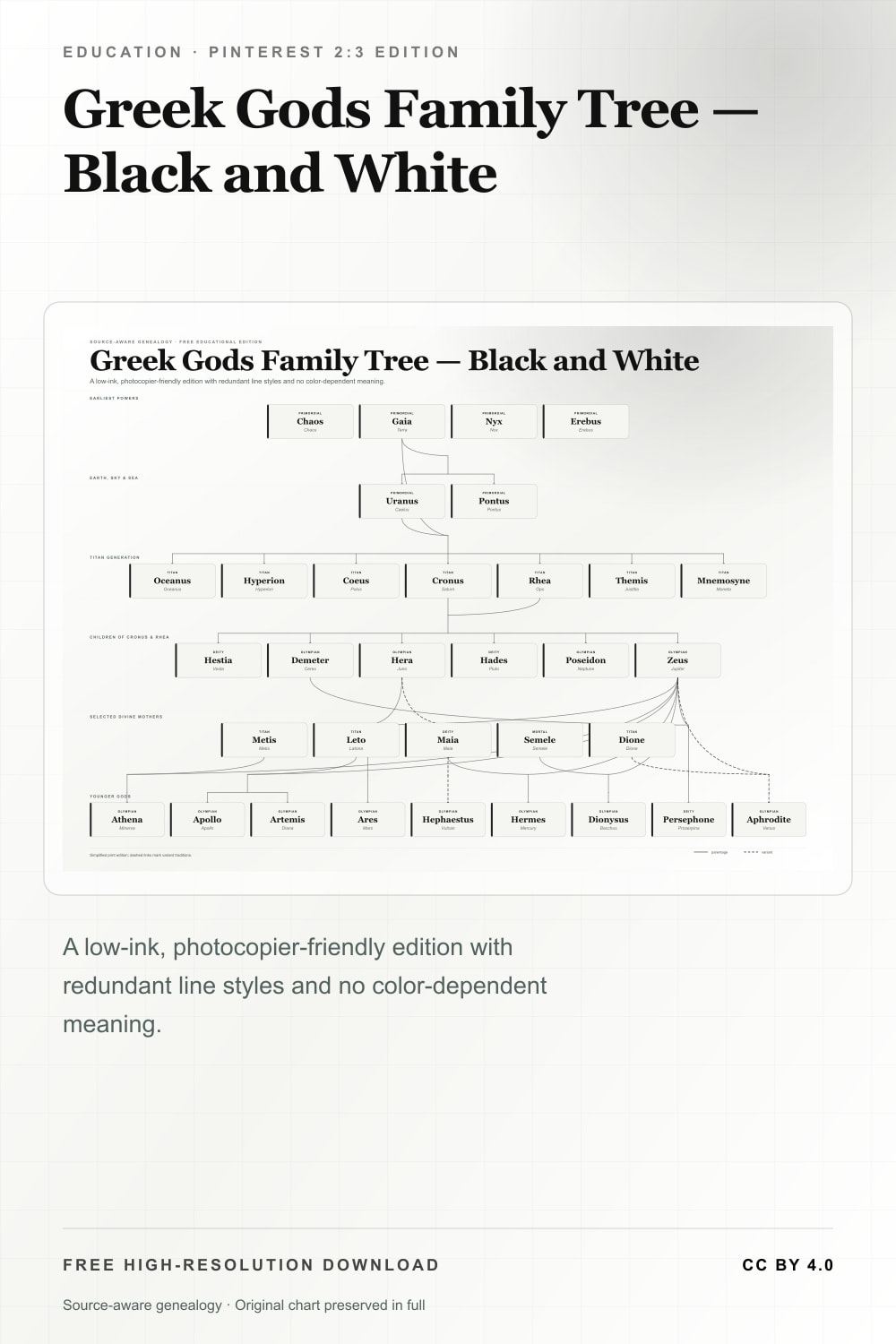
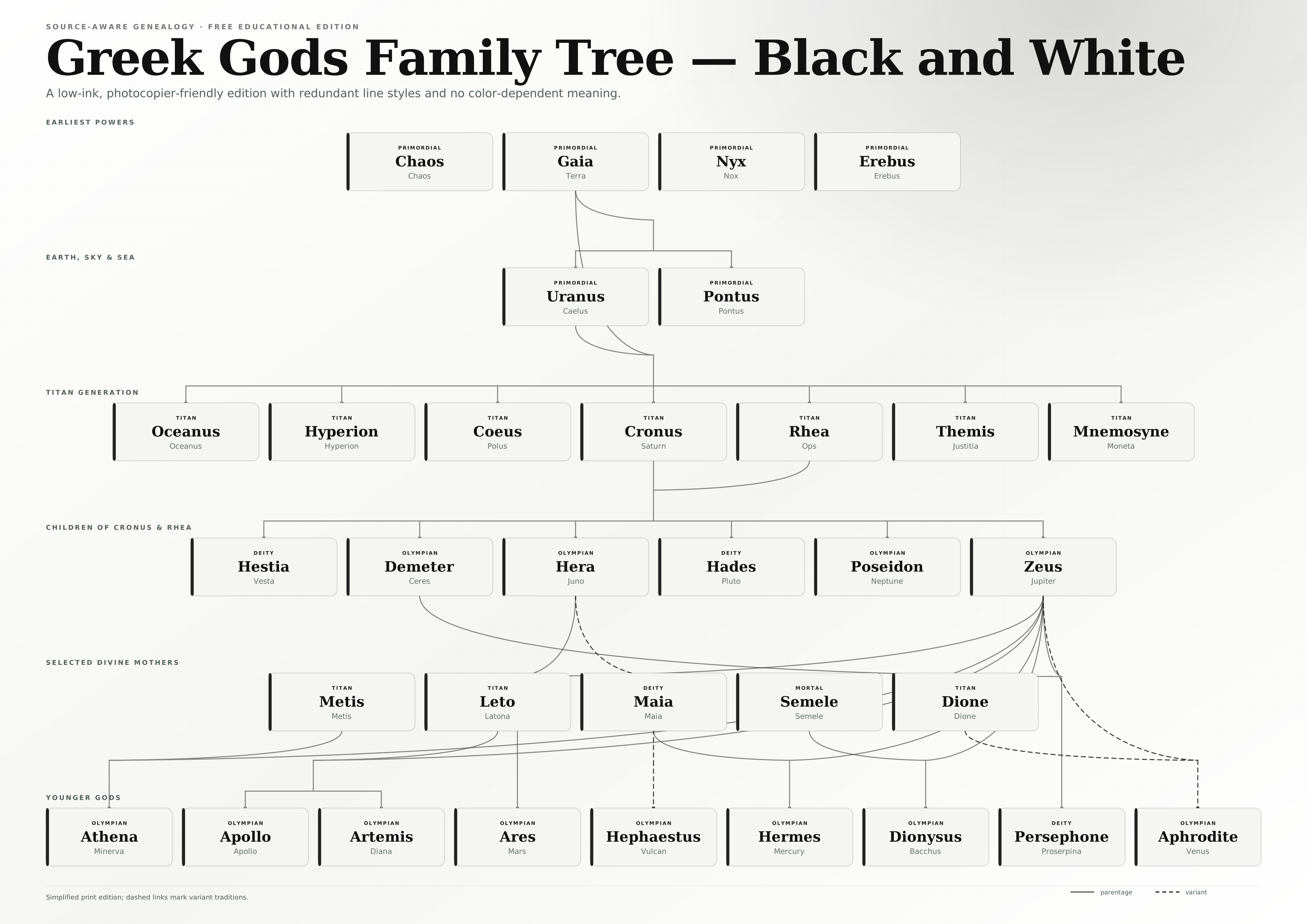
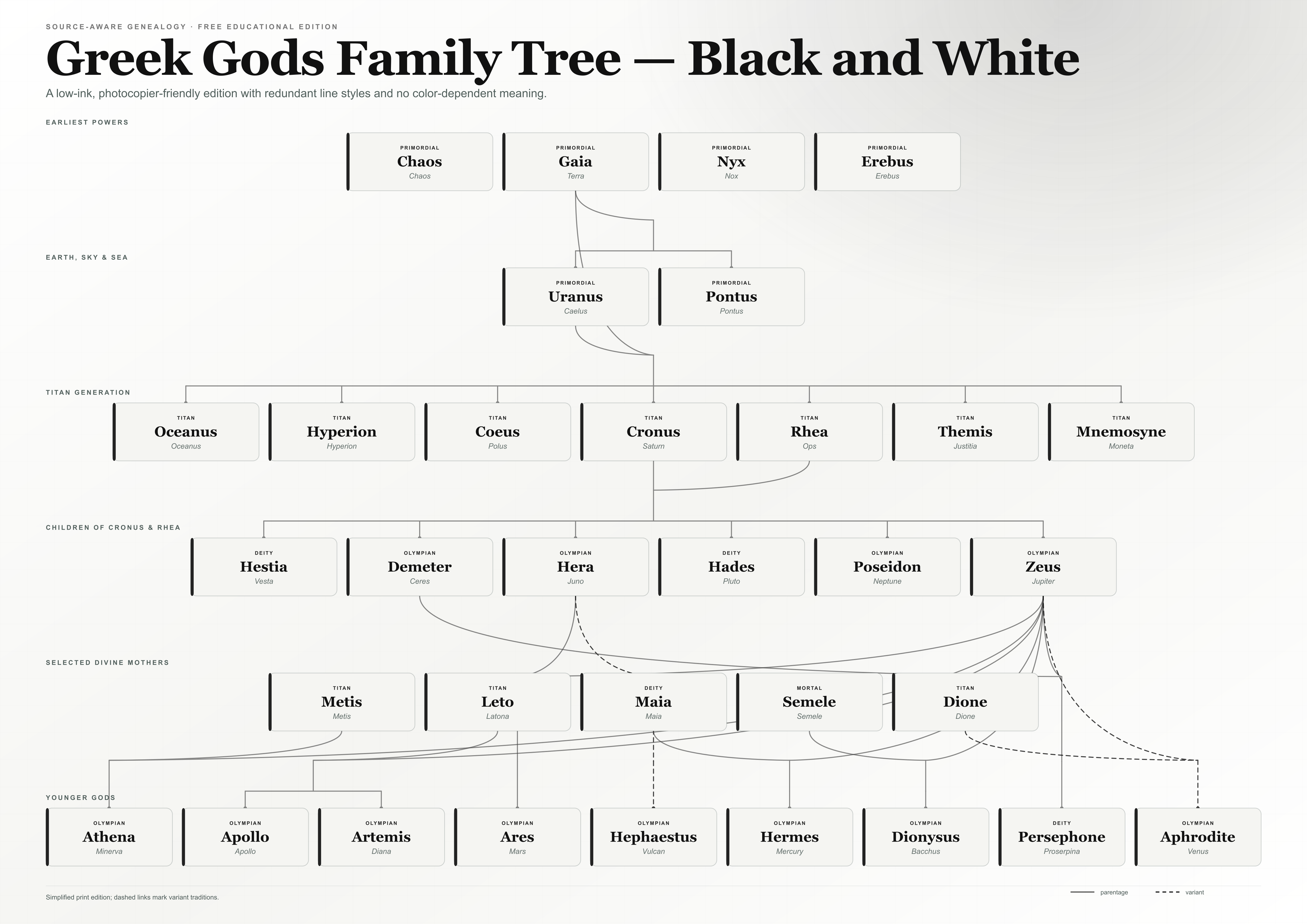
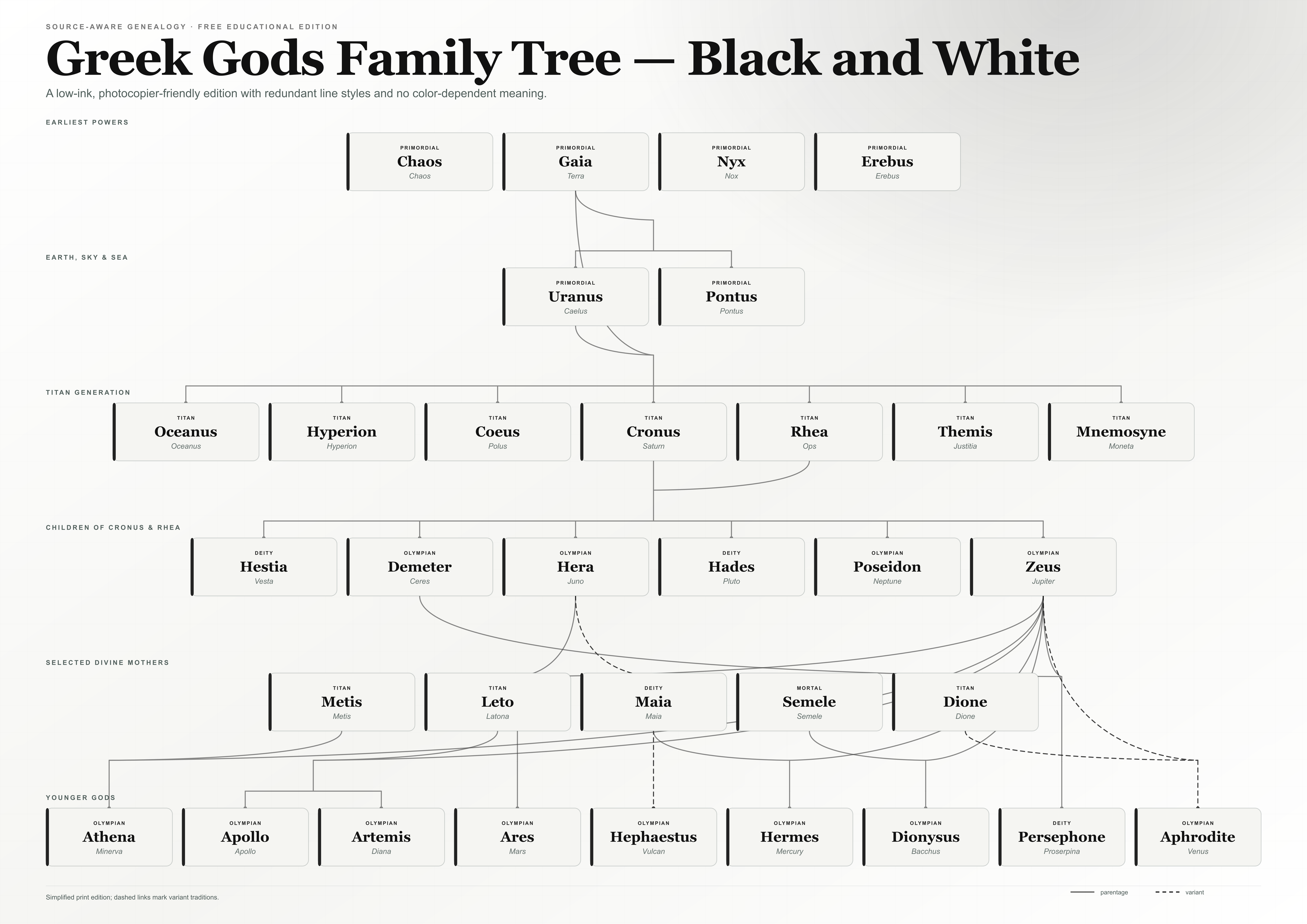
Greek Gods Family Tree — Black and White
A low-ink, photocopier-friendly edition with redundant line styles and no color-dependent meaning.
Download formats
Choose the right edition.
PNG files are ready for slides, websites, and printing. SVG files preserve editable type and relationship lines; portrait editions retain their embedded high-resolution artwork.
Genealogical scope
What this chart records.
Simplified print edition; dashed links mark variant traditions.
Greek mythology preserves multiple authors, periods, local traditions, and incompatible genealogies. This image is a documented visual guide, not a claim that one universal canon existed.
Free to reuse with credit.
No visible watermark is added to the artwork. Please credit MythBranch and link to this page so readers can inspect the source note and obtain updated files.
Read the license ↗Included figures
Names in this edition.
- Chaos
- Gaia
- Nyx
- Erebus
- Uranus
- Pontus
- Oceanus
- Hyperion
- Coeus
- Cronus
- Rhea
- Themis
- Mnemosyne
- Hestia
- Demeter
- Hera
- Hades
- Poseidon
- Zeus
- Metis
- Leto
- Maia
- Semele
- Dione
- Athena
- Apollo
- Artemis
- Ares
- Hephaestus
- Hermes
- Dionysus
- Persephone
- Aphrodite