Illustrated · Landscape · Unwatermarked
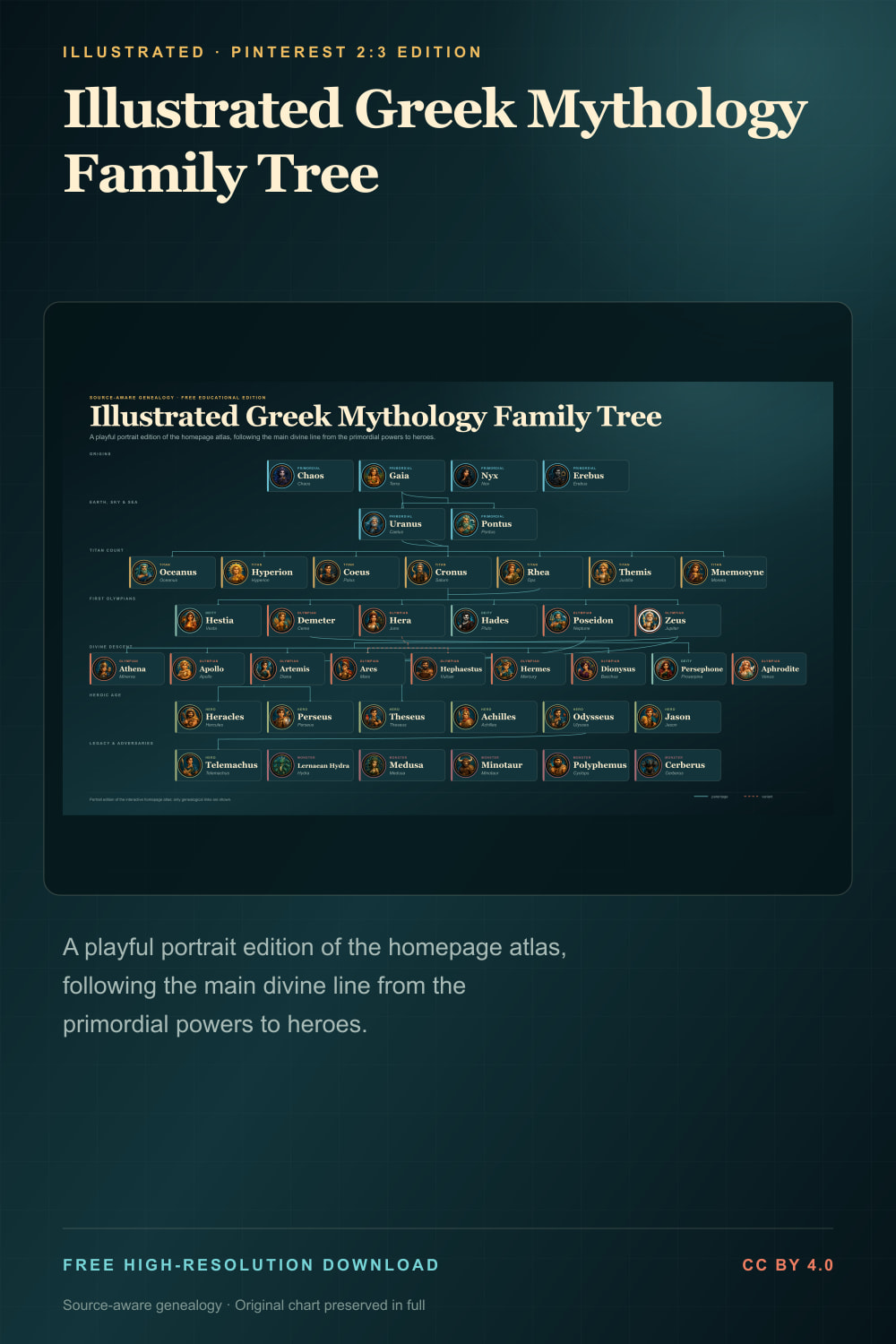
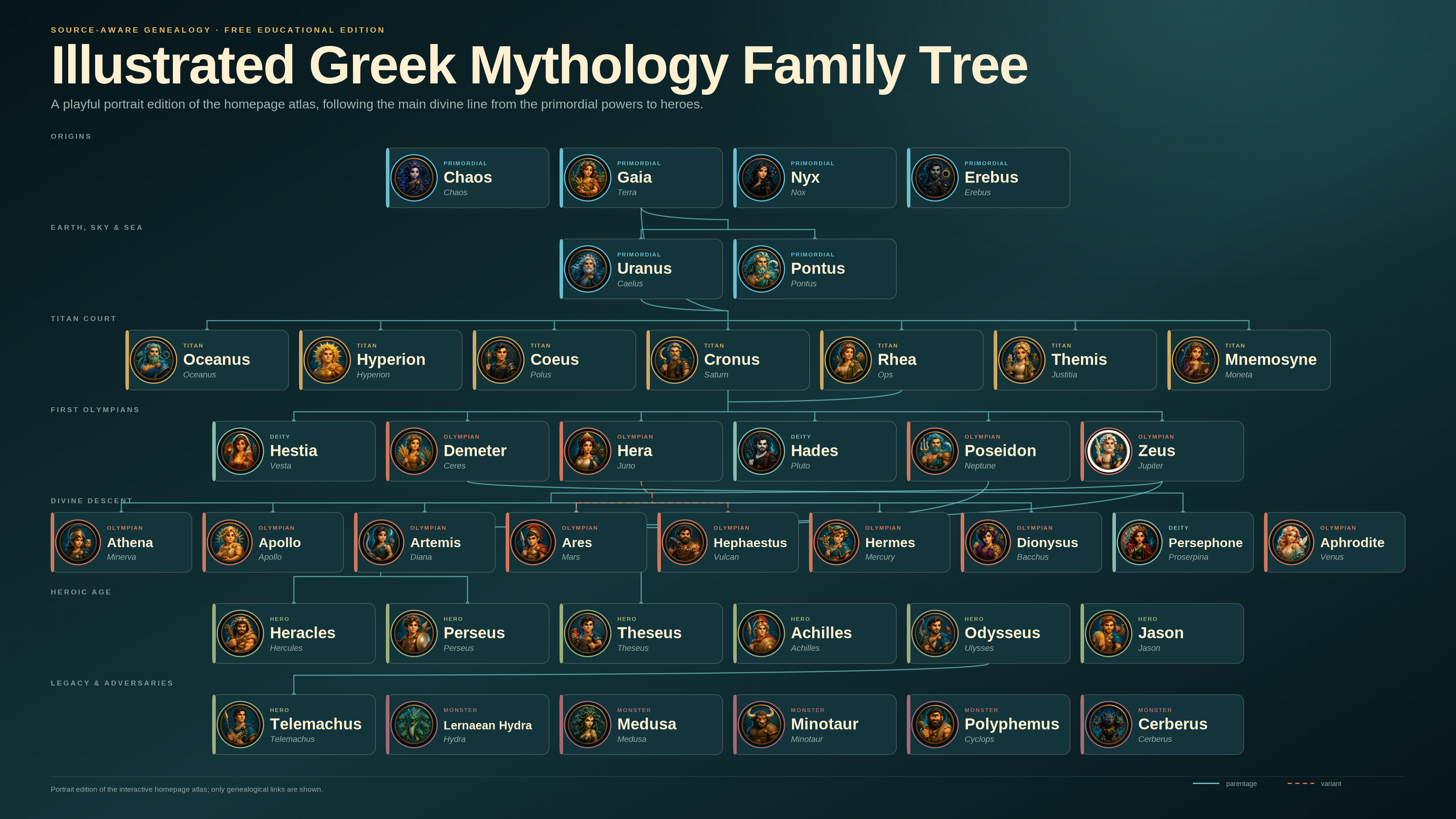
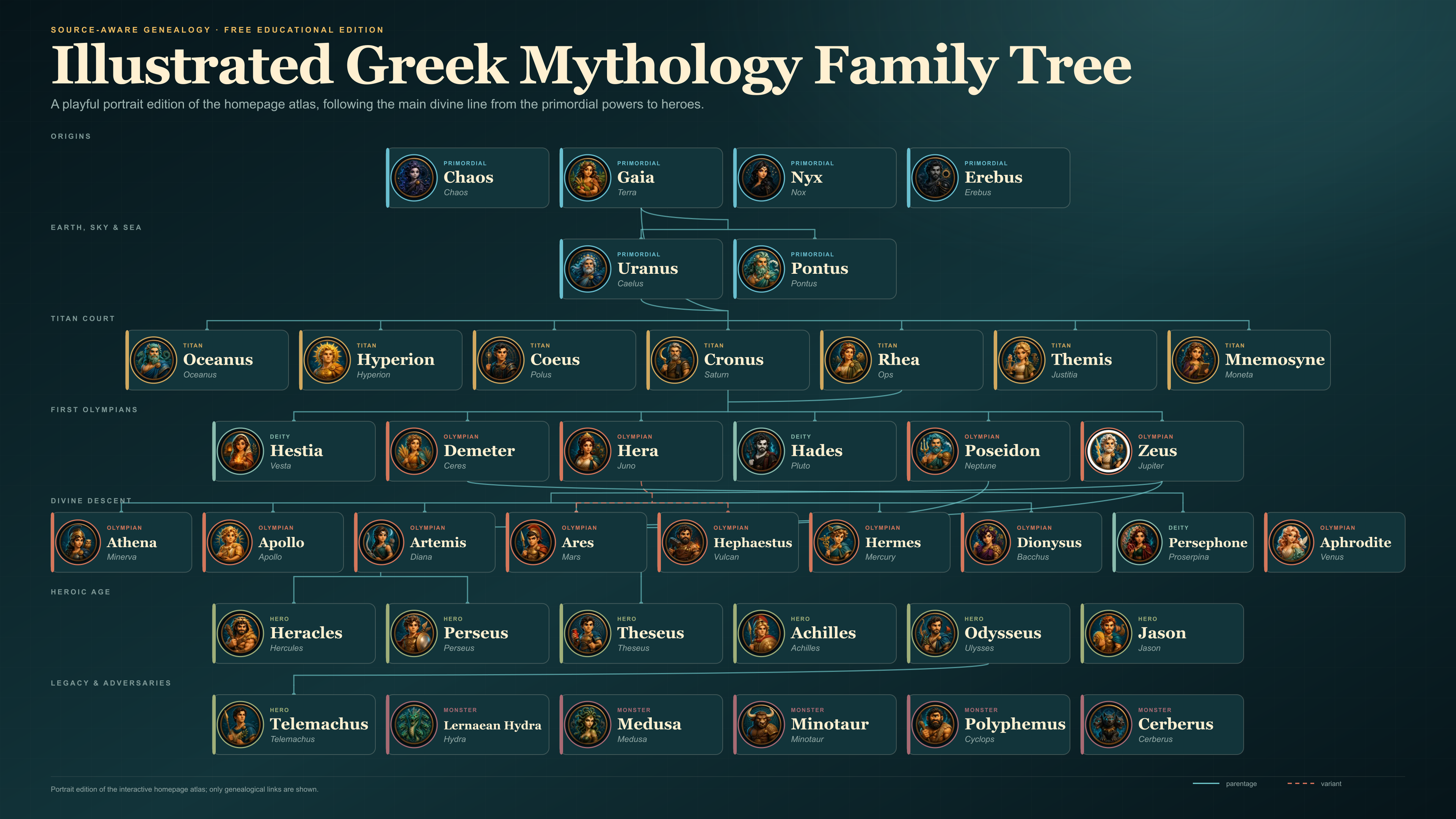
Illustrated Greek Mythology Family Tree
A playful portrait edition of the homepage atlas, following the main divine line from the primordial powers to heroes.
Download formats
Choose the right edition.
PNG files are ready for slides, websites, and printing. SVG files preserve editable type and relationship lines; portrait editions retain their embedded high-resolution artwork.
Genealogical scope
What this chart records.
Portrait edition of the interactive homepage atlas; only genealogical links are shown.
Greek mythology preserves multiple authors, periods, local traditions, and incompatible genealogies. This image is a documented visual guide, not a claim that one universal canon existed.
Free to reuse with credit.
No visible watermark is added to the artwork. Please credit MythBranch and link to this page so readers can inspect the source note and obtain updated files.
Read the license ↗Included figures
Names in this edition.
- Chaos
- Gaia
- Nyx
- Erebus
- Uranus
- Pontus
- Oceanus
- Hyperion
- Coeus
- Cronus
- Rhea
- Themis
- Mnemosyne
- Hestia
- Demeter
- Hera
- Hades
- Poseidon
- Zeus
- Athena
- Apollo
- Artemis
- Ares
- Hephaestus
- Hermes
- Dionysus
- Persephone
- Aphrodite
- Heracles
- Perseus
- Theseus
- Achilles
- Odysseus
- Jason
- Telemachus
- Lernaean Hydra
- Medusa
- Minotaur
- Polyphemus
- Cerberus
Use this edition · guide updated
Does recognizing a hero and a monster establish a family relationship between them?
A reading exercise
Locate Perseus and Medusa in the portrait edition and recall the story that connects them. Next, check which genealogical connections the chart actually supplies, keeping those separate from their encounter. Make a two-column note headed descent and narrative encounter, with one supported example in each. Use it to explain why two familiar characters can belong in the same atlas without belonging to the same household.