Reference · Landscape · Unwatermarked
Greek and Roman Gods Family Tree
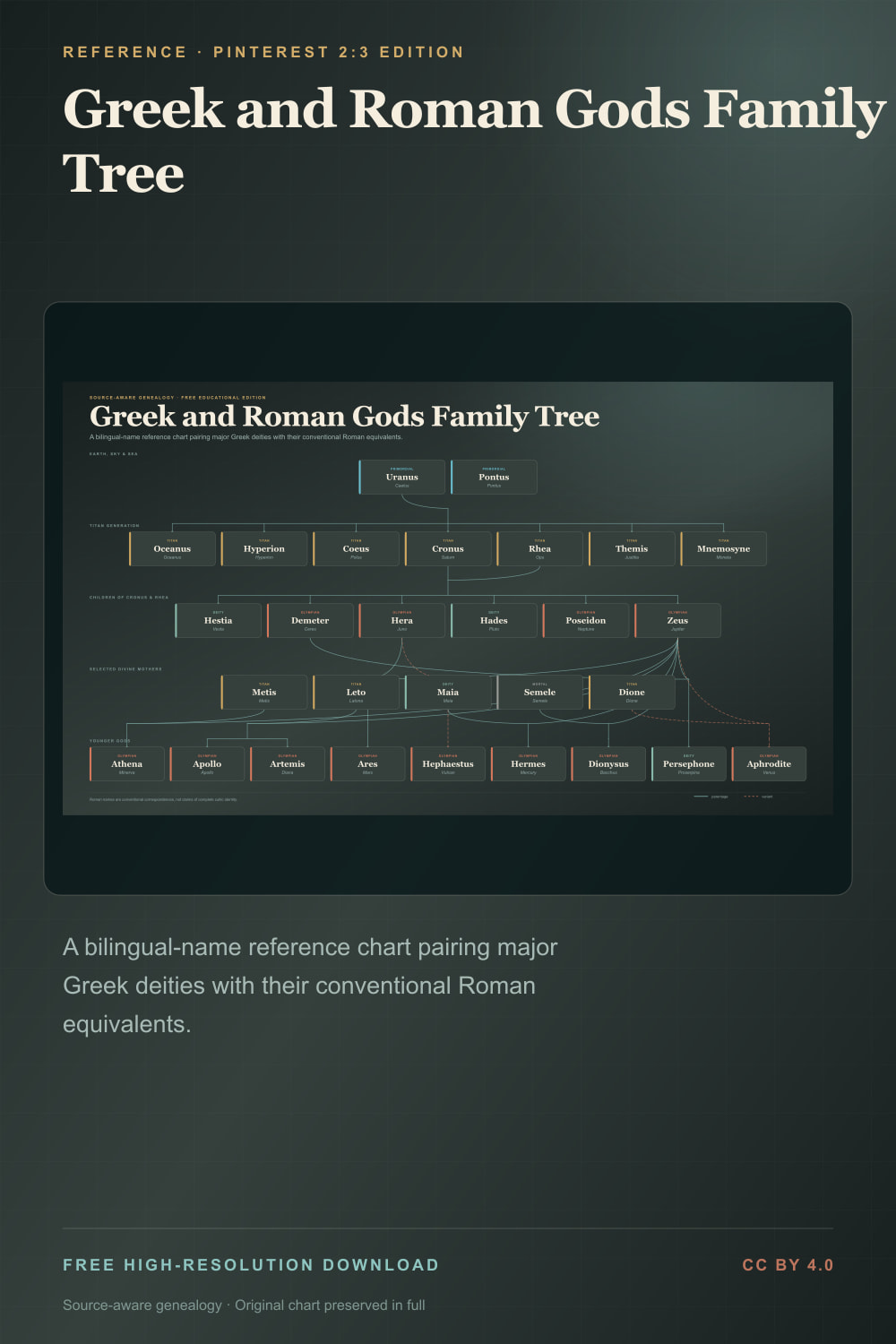
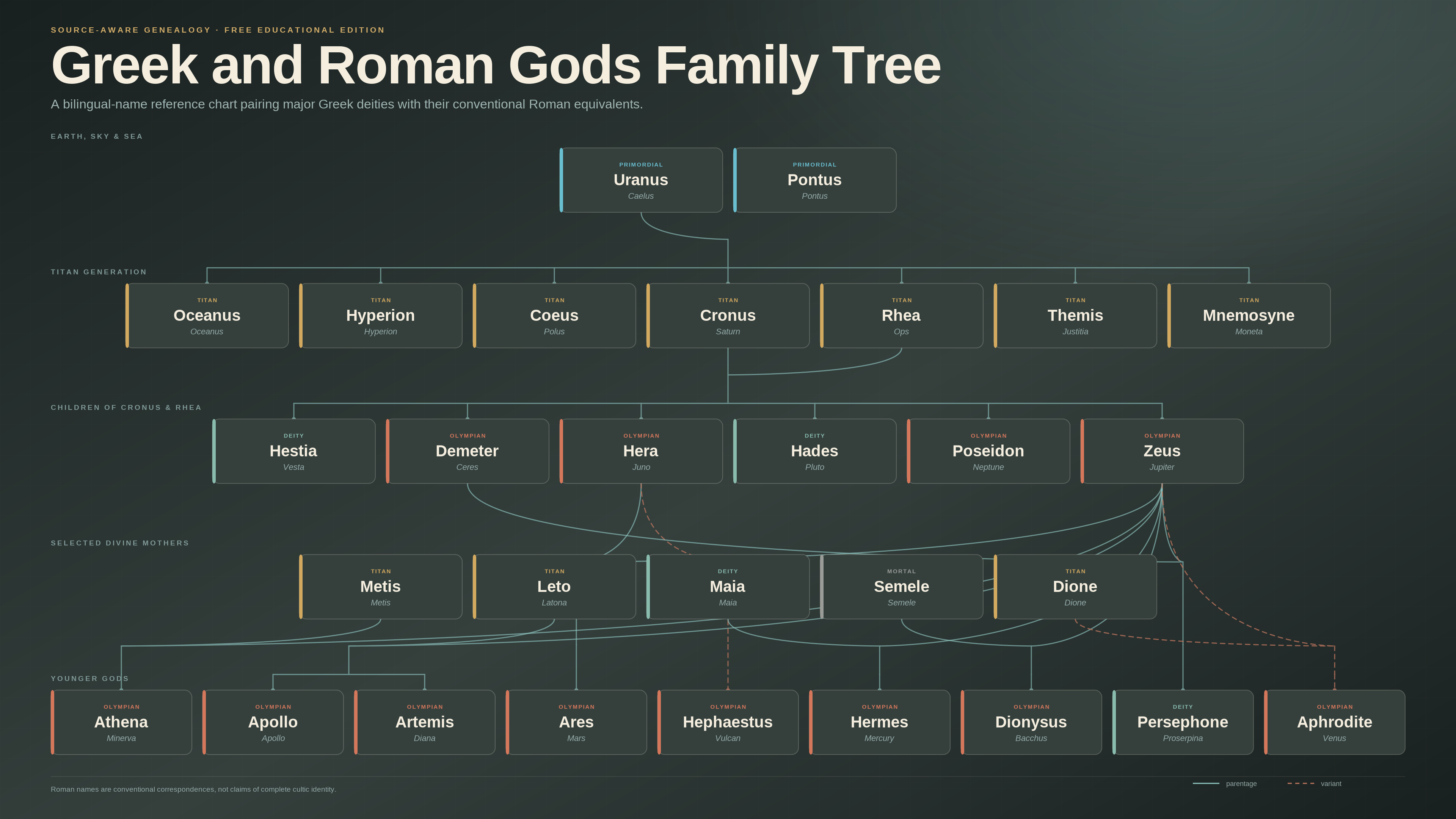
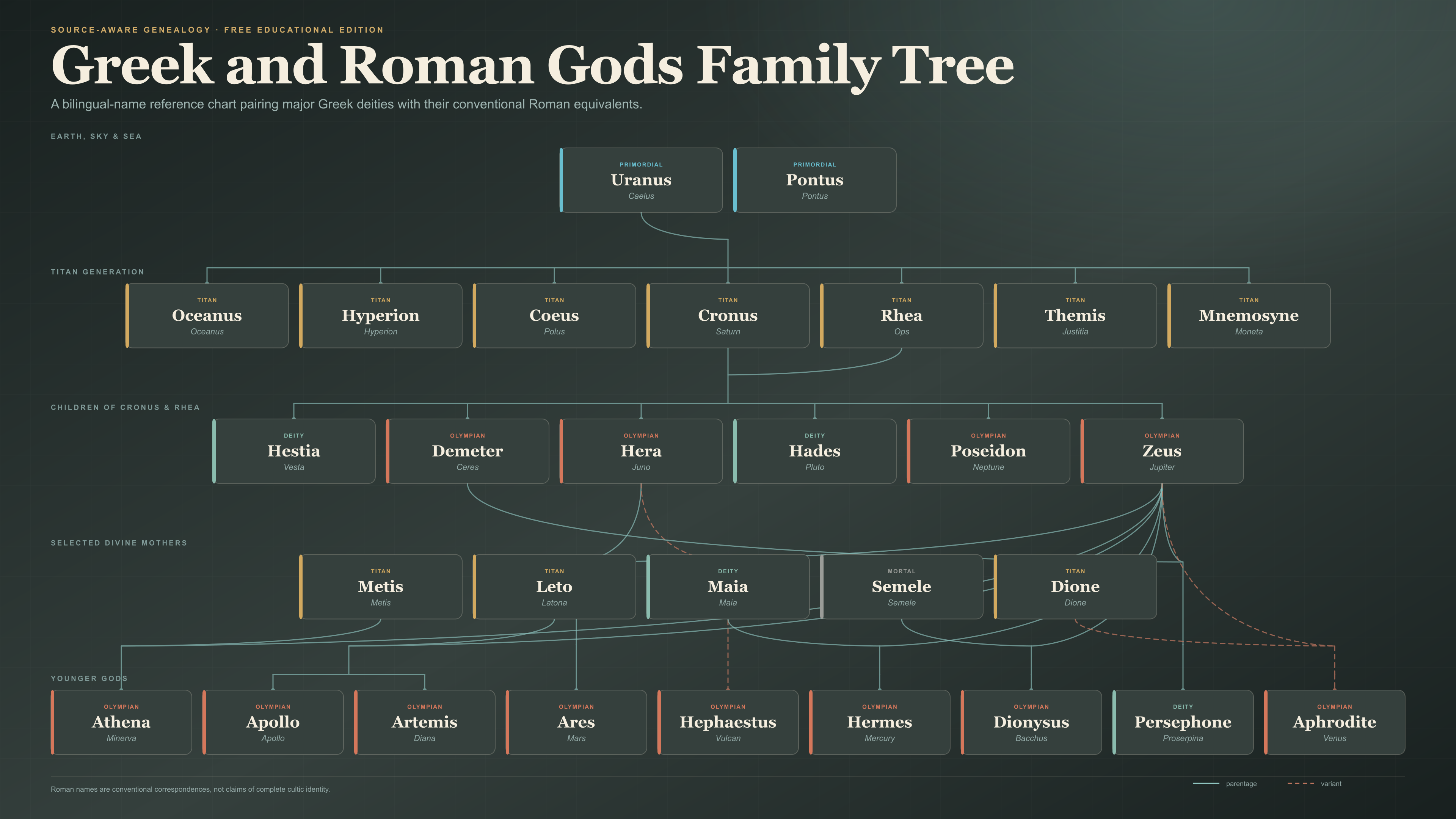
A bilingual-name reference chart pairing major Greek deities with their conventional Roman equivalents.
Download formats
Choose the right edition.
PNG files are ready for slides, websites, and printing. SVG files preserve editable type and relationship lines; portrait editions retain their embedded high-resolution artwork.
Genealogical scope
What this chart records.
Roman names are conventional correspondences, not claims of complete cultic identity.
Greek mythology preserves multiple authors, periods, local traditions, and incompatible genealogies. This image is a documented visual guide, not a claim that one universal canon existed.
Free to reuse with credit.
No visible watermark is added to the artwork. Please credit MythBranch and link to this page so readers can inspect the source note and obtain updated files.
Read the license ↗Included figures
Names in this edition.
- Uranus
- Pontus
- Oceanus
- Hyperion
- Coeus
- Cronus
- Rhea
- Themis
- Mnemosyne
- Hestia
- Demeter
- Hera
- Hades
- Poseidon
- Zeus
- Metis
- Leto
- Maia
- Semele
- Dione
- Athena
- Apollo
- Artemis
- Ares
- Hephaestus
- Hermes
- Dionysus
- Persephone
- Aphrodite
Use this edition · guide updated
What can the Aphrodite–Venus name pairing explain, and what does it leave open?
A reading exercise
Use the chart to identify the conventional Roman counterparts of Aphrodite and Ares. Then select one Greek passage and one Roman passage involving either pair, recording the work, speaker, and purpose of the divine reference. Consider whether substituting the other name would preserve the passage’s meaning. Write a caption that helps a beginner recognize the correspondence while retaining the work’s own religious and political setting.