Powers on the table
- Persephone: Moving between very different worlds and being respected in both.
- Zeus: Holding competing people and interests in one order.
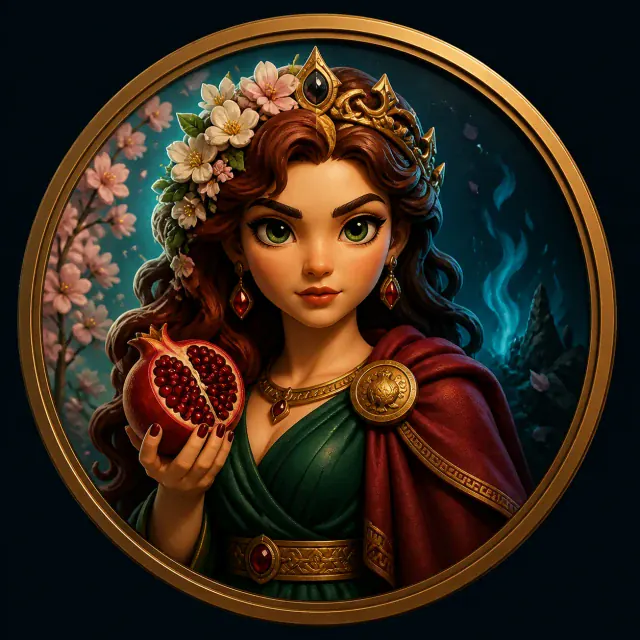
The Two-World Bridge
The Crossing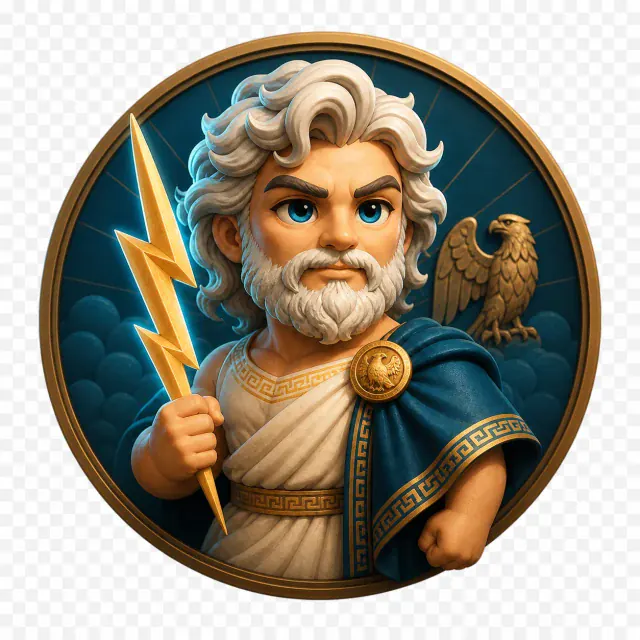
The Centre of Gravity
Hall of OlympusDIVINE TYPE COMPATIBILITY · 0 OF 4 LETTERS SHARED
Zeus gives Persephone to Hades without her mother's knowledge, and Zeus finally decrees the yearly return that splits her life between two worlds.
AXIS BY AXIS
Each letter is a Greek opposition. Shared letters are common ground; split letters are where the interesting arguments live.
Zeus works in the open and Persephone works below the surface. One brings the stage and the other brings the foundations, so agree early which parts of a plan get announced.
Persephone reaches for the clever route and Zeus for the direct one. One finds the gap and the other holds the line; most friction here is about pace, not values.
Zeus keeps the hearth and Persephone takes the road: the pairing of Hestia and Hermes, who share a Homeric hymn. One needs a return date and the other needs an open door.
Zeus wants the story to carry the right name and Persephone wants everyone at the table looked after. Together you get both the record and the people who show up for it.
Persephone: Belonging everywhere becomes belonging nowhere.
Zeus: Every outcome has to pass through you.
Every letter flipped: in this system you are exact opposites, which also means you cover each other's blind spots.